



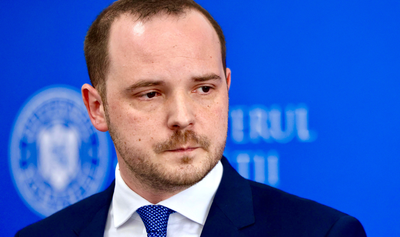


Health Minister Alexandru Rogobete said on Friday that the possibility of opening direct negotiations with Pfizer is being examined so that, against the sum of 600 million euros owed by Romania, the country would receive innovative medicines from the company, thereby enabling the introduction of modern therapies into the public healthcare system.
"When you receive an invoice and are faced with a done deal, the first impulse is to look for those responsible. (...) The decision of the French-speaking Court of First Instance in Brussels, in the case concerning the contracts with Pfizer, places Romania under a major financial obligation. We are not discussing the pandemic here. We are not discussing the need for vaccination. We are discussing the effects of administrative decisions which today weigh directly on the public budget. (...) Following the discussions held, one of the scenarios we are analysing is the opening of direct negotiations so that these amounts can be turned into real benefits for patients. More precisely: faster access to innovative medicines, the introduction of modern therapies into the public system and the expansion of treatments for patients who, until now, had no alternatives," Rogobete wrote on Facebook.
In his view, inaction means a double loss: money paid and opportunities missed for patients.
The minister of Health believes that this is not a simple solution and not a decision that can be taken overnight, but it is a responsible direction, in which a financial obligation is transformed into a tangible gain for the healthcare system.
A court in Brussels ruled on Wednesday, at first instance, that Poland and Romania must pay outstanding balances for COVID-19 vaccines ordered from the pharmaceutical group Pfizer/BioNTech, amounting to 1.3 billion euros and 600 million euros respectively, according to a statement from the court, AFP reports.
The American pharmaceutical company Pfizer filed lawsuits against the two countries in the autumn of 2023 in order to enforce these procurement contracts, which, following the end of the pandemic, Poland and Romania refused to fully honour.

























Comentează