



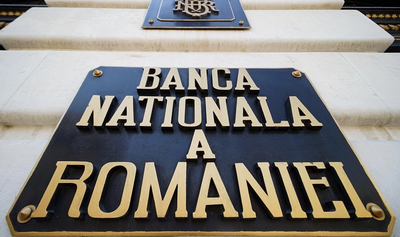


Romania must rely on a strong economics school, says the deputy governor of the National Bank of Romania (BNR), Cosmin Marinescu, noting that a highly performing , competitive and resilient economy is the result of an economics school with the same attributes.
"Romania must rely on a strong economics school, and by "economics school" I mean more than the training of specialists in various fields, accounting, finance, marketing, tourism, etc. I am referring here both to the specific skills of the business economist, and especially to the vision necessary for the public policy economist. A highly performing, competitive and resilient economy is the fruit of an economics school with the same attributes. The economy cannot evolve independently of the skills offered by the Romanian school, just as the business community cannot perform without a dynamic and competitive managerial class. That is why I believe that the economics school has direct responsibilities, both for the real economy and for the quality of public policies," Marinescu said on Thursday at a conference on risks and opportunities in the Romanian financial system.
He said that the Bucharest School of Economics (ASE) continuously performs in relation to the demands of the labour market, and the Romanian university environment treats, with all seriousness, the current educational and research challenges. But structural changes in the economy, technological transformations and the necessary solutions in terms of public policies, require rapid adaptations for everyone, including monetary and financial authorities.
"Romania is already facing important structural gaps, and the shortage of well-qualified labour has been one of the most pressing problems of the business community for many years. At the same time, the financial and banking sector is acutely feeling the increased pressure of digital technologies and artificial intelligence. And technology not only makes financial intermediation more efficient, but makes it more accessible, especially given that Romania has the lowest financial intermediation rate in the EU, the proportion of bank assets in GDP being only 50%. Business economists, but also public policy economists, face serious tasks and challenges, commensurate with the vulnerabilities in the economy. For example, in terms of sources of financing for companies, in Romania, the use of commercial credit is the highest among all EU countries, namely 17% of liabilities. For comparison, bank loans hold a share of only 9% in the total liabilities of companies. As an overview, 79% of companies in Romania use financing from domestic funds, as against just 16% according to the EU average, which slows down the pace of development of companies," said Marinescu.
In his opinion, while the economics school of business adapts more easily, under the pressure of market forces and new technologies, the economics school of public policies has a harder time structuring its product and is much more discreet in terms of presence in the economic debate.


"In this regard, our role, as the regulatory authorities, in the economic, monetary and financial spheres is significant. That is why it is important to meet the profile universities, with articulated proposals for study programmes and scientific research projects, adapted to the challenges we face. In this regard, the BNR-ASE collaboration is productive, but it is worth thinking about more and better. The economics school of public policies must respond to the existing challenges at macroeconomic and sectoral level. Romania is facing major economic imbalances, fuelled mainly by domestic procyclical policies, not by exogenous shocks. In recent years, Romania's economic problem is the burden of twin deficits, which have deepened against the background of budgetary policies that are contrary to responsibility. Public debt has registered the fastest growth in the European Union, and is now close to the reference level of 60% of GDP," said Marinescu.
At the same time, he added that Romania has deficiencies in terms of sectoral policies that become obvious especially in times of crisis.
"The absence of consistent and visionary policies, especially in strategic areas, such as energy, weakens the economy's ability to respond effectively to shocks, such as the shocks generated by war, which we are facing, more and more often and more intensely. Given the circumstances, the economics school of public policy acquires an essential role, and the economists who underpin economic policy decisions have a particularly important professional responsibility. And I am referring here to the responsibility of sustainability," said Marinescu.
He added that the role of the economics school is to produce technical skills, but also to give young economists a qualitative way of thinking and acting, which protects the economy from errors and arbitrary decisions.
"Economic policies can also lead us in the wrong directions, the correction of which will require efforts and costs for years or decades. We are now witnessing global developments that, through severe geopolitical tensions, the weakening of commercial freedom and institutional order, can push us into traps that are difficult to fix. All these challenges can be pursued through quality academic programmes and open debates, including about the key role of the economist in current times. I am convinced that, together with my colleagues from ASE, but also with economists from other universities, and with the support of the National Bank of Romania, the economic debates will be reflected in healthy solutions for Romania's development," said Marinescu .























Comentează