



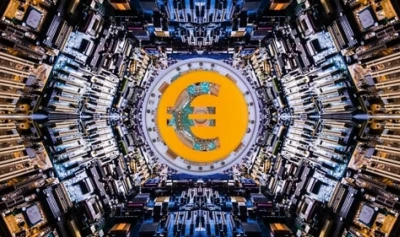


The digital euro is essential for protecting Europe's monetary sovereignty and reducing dependence on non-European payment providers, according to an article published on Tuesday on the Opinii BNR blog, signed by Cristian Bichi, advisor to the governor of the National Bank of Romania.
He refers to an open letter addressed to the European Parliament and signed by over 60 economists, in which they ask MEPs not to dilute the provisions of the current digital euro project, warning that otherwise the euro area will lose control over its own currency and become even more dependent on American digital payment service providers.
The open letter, entitled "Digital Euro: Let the public interest prevail!", was published on January 11, 2026. It was initiated by the think tank Sustainable Finance Lab and Triodos Bank, both entities in the Netherlands, and was signed by numerous economists and academic figures, including Thomas Piketty, Paul de Grauwe (LSE) and Daniela Gabor.
"The call was made public in view of an upcoming meeting of the Committee on Economic and Monetary Affairs (ECON) of the European legislative forum, where the proposed amendments to the "Digital Euro Legislative Package" are to be discussed, before its presentation to the plenary of the Parliament in the middle of this year. If the digital euro project is approved, pilot tests will be carried out in 2027, and the issuance of the new digital currency will take place in 2029, according to estimates by the European Central Bank (ECB)," the document states.
The European Council supports the ECB's decision to launch a digital euro, but it is not yet clear whether the European Parliament will agree, as its members are divided on the single digital currency. Against this background, the signatories of the open letter point out that the existence of "a strong digital euro is not something nice to have, but an essential precautionary measure for European sovereignty, stability and resilience," says Cristian Bichi.


Economists warn that Europe's payments system is currently dominated by a few non-European corporations and that in 13 European Union countries, "basic retail payments now rely on international card schemes - with no domestic alternative." They point out that this dependence on foreign payment providers exposes European citizens, businesses and governments to geopolitical influences, foreign commercial interests and systemic risks beyond Europe's control.
Referring to the advance of stablecoins, economists also warn that without a meaningful digital euro, Europe's dependence will deepen as private digital currencies backed by the US gain ground. In this context, they state that "Europe will lose control of the most fundamental element of our economy: our currency. A robust public digital euro is our only defense."
According to the article, a eurozone-wide central bank digital currency would create a direct link between citizens and the ECB, offering them the security of public cash alongside the advantages of private bank money. Thus, the digital euro should work both online and offline, protect privacy and be available to all European residents.
The author shows that pressure to scale back the digital euro project is being exerted by both some banks and certain politicians in the European Parliament, who invoke risks related to financial stability, costs and privacy protection. He also mentions the critical positions expressed by several European banks and some political factions, who call for a less ambitious version of the European digital currency.
The open letter warns of the risk that legislative negotiations will empty the digital euro project of content and proposes that it become the backbone of a European payments infrastructure, a public digital currency accessible to all Europeans and a credible means of storing value.
For the signatories of the appeal, the digital euro is a public good. "Therefore, it is necessary for political decision-makers to resist the short-sighted efforts of financial lobbying and not to let the new European digital currency become, as a result of a compromise, something merely symbolic," the quoted source claims.
The open letter concludes with the warning that "Europeans may not get a second chance." "The question facing EU policymakers is simple: will Europeans exercise control over their currency in the digital age, or will we let others control it for us?" the document states.

























Comentează