



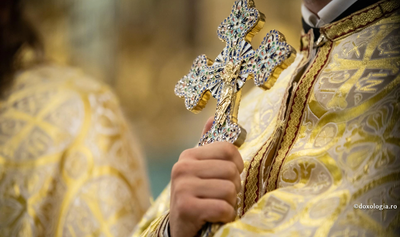


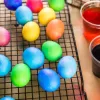
In Banat villages, Holy Week blends humility, prayer and fasting, but Maundy Thursday remains the moment when the sacred meets profane practices: while in churches the priests prepare the Holy Communion for the whole year, the young people light fires on the hills or in cemeteries, bringing light to the departed, and the women paint eggs because Black Friday is a day of prayer that accompanies the Lord's Lamentation service.
Timisoara archpriest, Father Zaharia Peres says Holy Week begins with Palm Sunday, when the joy that filled the village streets gives way to calm and good manners, even among children.
"On Lent Sundays, until Palm Sunday, the streets were bustling with activity, in a ritual game called 'old pops and the hag' and that would set off in a procession through the village. The custom is still preserved in the Almaj Valley," he recalls. Young people dressed in all kinds of costumes - policemen, firefighters, old men and old women - wearing white cloth masks so they wouldn't be recognized. "It was a real carnival."
Armed with willow sticks cut from the riverbank, they roamed the village every Sunday afternoon. "They would chase those who crossed their way, playfully beating the boys and kissing the girls. The boys wouldn't escape until they dressed up and joined the procession. It was a beautiful custom," Father Zaharia says. He remembers doing the same: "If I saw I couldn't escape their spanking, I went home, dressed up in the strangest attire I could find, put on a mask and went into the street. This time I had become brothers with them." In the evenings, the group gathered at one of the boys' homes to tell stories and eat baked apples and potatoes. "There was a lot of good merriment," he recalls.
These carnival processions lasted until Palm Sunday, when the whole village went to church. On the eve, children helped the priest prepare the willow branches that were blessed and distributed the next day.
On Monday evening, fires were lit on the hill where a cross stood, announcing Holy Week. Later, villagers gathered around the church fires, young and old alike, sharing stories about Easter and the Resurrection.
On Holy Thursday light took on a symbolic meaning - from the dawn fire at the graves of the departed to the remembrance of Peter warming himself by the fire before denying Christ.
"Hazelnut wood was prepared in the evening, and before sunrise the fire was lit in the house," Father Zaharia recounts. "They went to the cemetery, incensed the graves, prayed the Our Father and offered alms for the dead. In the evening the whole village was in church, attending the Service of the 12 Gospels. When the bells stopped ringing, the rhythmic sound of the semantron would take over until the night of the Resurrection."


On Saturday morning, after the Liturgy of Saint Basil, the faithful quietly await the moment when night turns into Eternal Light. The flame taken from the priest is carried home and kept all year, as a protection in storms or hardship. Ancestors believed that on the Night of the Resurrection "hidden treasures were unlocked, and flames played over those places," as Father Zaharia's grandmother told him.
Man, he says, was born in light, but lost it through Adam's disobedience, and regained it through the sacrifice of Christ. "Man extinguishes his own light when he loses hope in God. Judas was an example. In the Light of the Resurrection we have the Father's love for human nature, so great that He sacrificed His Only Son for our salvation."
Quoting Metropolitan Ioan of Banat, he adds: "He who loves suffers. Love and sacrifice are the best sisters. ... Love and suffering are two candles in which we must always put the oil of good deeds. He who loves and sacrifices himself will receive great grace from the Risen Christ."
Beyond customs and traditions, Father Zaharia says, Light has accompanied Christianity from birth to the candle glow placed at the head of the departed, and the Radiance of the Resurrection tore through the darkness, transforming it into the eighth day of eternal Light.
















Comentează