



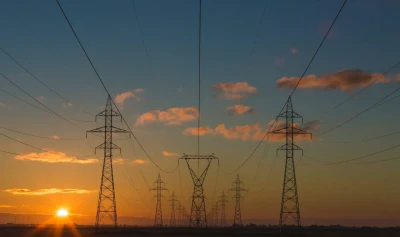


Romania needs an energy doctrine in which security and continuity of supply dominate market logic, and energy autonomy is doubled by internal technological capacities, so that the state can function at peak consumption and in crisis situations, in an increasingly competitive geopolitical context, according to an analysis carried out by the Smart Energy Association.
"An energy doctrine is necessary, that is, a set of security priorities that dominate the strict market logic when the stakes are continuity of supply and the interests of the state. The principles are clear: energy as part of defense; independence measured at peak consumption; priority for domestic production in crisis; networks as critical infrastructure; storage as security assurance; gas as transitional flexibility; nuclear as an anchor in system security; efficiency as a "source" that reduces vulnerability without adding dependency. If equipment, maintenance, software, parts and know-how remain imported, supply chain disruptions can produce effects similar to a power outage. Therefore, the analysis calls for an industrial shift: Romania to become an integrator and producer of critical subsystems, not just an importer, through long-term contracts, technology transfer and compatible industrial policies at European level," the study "Energy Analysis of Romania in a Context of Geopolitical Insecurity and Withdrawal of External Guarantees" states.
If equipment, maintenance, software, parts and know-how remain imported, supply chain disruptions can produce effects similar to a power outage. Therefore, the analysis calls for an industrial shift: Romania to become an integrator and producer of critical subsystems, not just an importer, through long-term contracts, technology transfer and compatible industrial policies at European level," the study "Energy Analysis of Romania in a Context of Geopolitical Insecurity and Withdrawal of External Guarantees" states.
"The difference between stability and vulnerability will not be determined by discourse, but by the capacity to maintain the functioning of the state at peak consumption and in crisis, through production, networks, storage, governance and controllable technological chains. If these capacities are not built, Romania remains either in the gray area or exposed to a systemic crisis; if they are built, energy goes from a problem to an instrument of power," the analysis shows.
The authors of the study claim that "energy independence", abandoned in the era of globalization, is currently being replaced by a forced return from the concept of "energy security" to that of "energy autonomy".
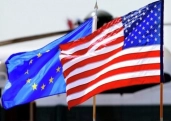
According to the cited source, the order in which Romania built its security after 1990 is "thinning", and the analysis starts from the hypothesis that the US National Security Strategy of November 2025 marks the transition from the role of "omnipresent guarantor" to a stricter selection of interests, in which protection is conditioned by the partners' ability to manage their own risks.


In this context, energy is moved from the economic register to the security register, not because price is the only determinant of power, but because energy supports the continuity of the state - industry, transport, health, communications, public order and defense. The analysis warns that, in the 21st century, state failure can occur through the blocking of critical systems, not necessarily through invasion.
According to the document, the energy security model based on interconnected markets and "always available" imports becomes insufficient in a context of competition between great powers, in which resources can be used as a weapon, and the fragmentation of markets and the risk of disruptions, including hybrid attacks, increase significantly.
Thus, the AEI analysis outlines three possible trajectories for Romania in the period 2025 - 2035: energy autonomy as self-sustainability in stress situations, increased dependence on imports, with major security risks, and the "gray area", characterized by managed improvisation and structural vulnerability, in which Romania currently finds itself, according to specialists.
"The gray area is the most seductive and dangerous scenario. (...) The study refers to seasonal imports managed ad-hoc, strategic projects blocked (hydro, gas extraction, etc.) or pushed forward without a time horizon, partially modernized networks, reactive interventions and caps that temporarily calm, but do not structurally repair. Romania remains in a regime of managed improvisation: it does not collapse, but it does not gain freedom of movement either. It becomes dependent on "where the wind blows" of geopolitics. Romania finds itself in this dangerous situation today", specifies the AEI.
















Comentează