






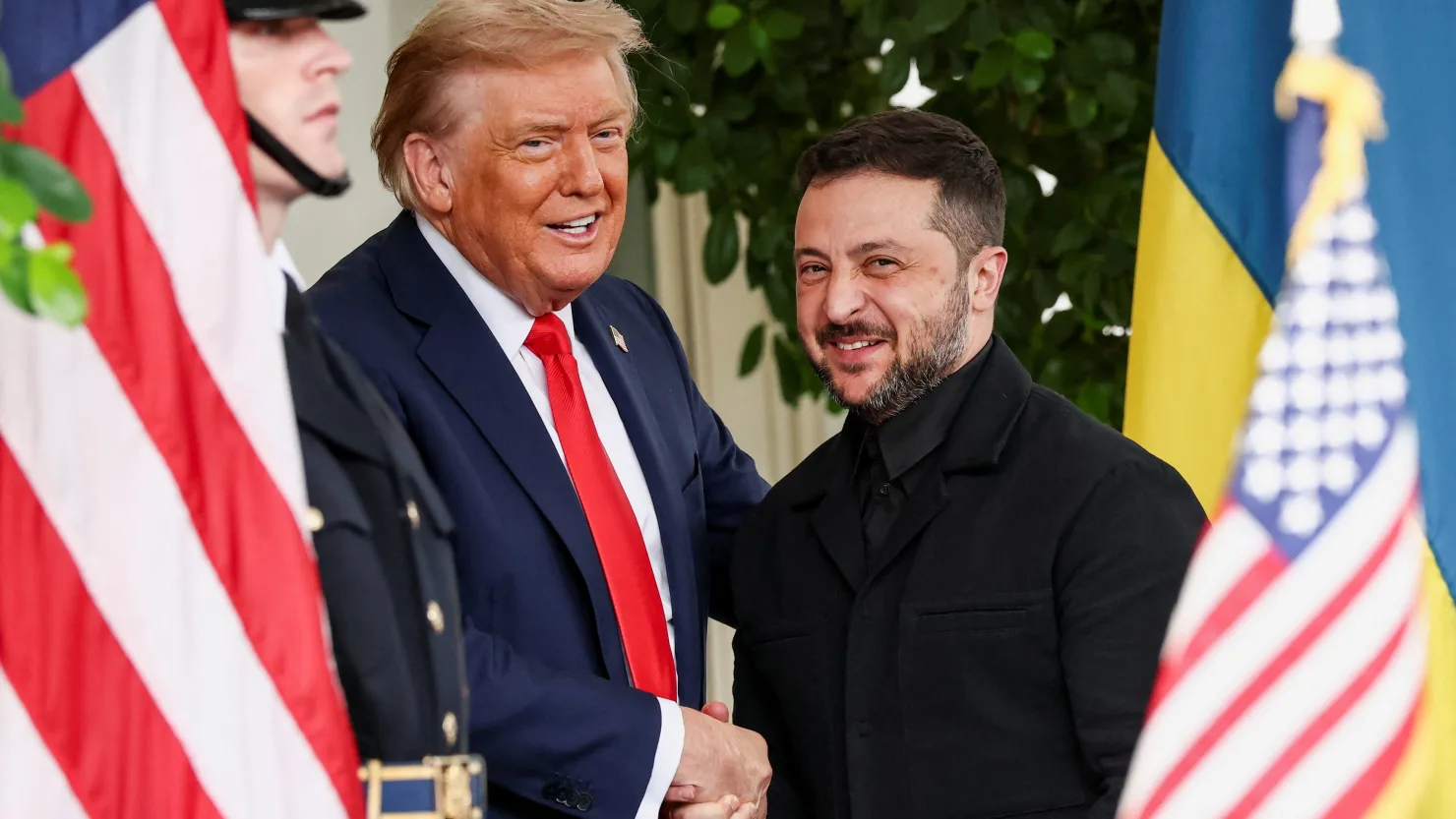
A bit over half of Romanians (50.4%) believe that, amid the ongoing tensions between the European Union and the American Administration led by Donald Trump, Romania should strike a balance between the EU and the U.S., according to the Informat.ro Barometer - INSCOP Research, eighth edition, conducted between March 2-6, 2026 and released on Thursday.
At the same time, 22.7% believe that Romania should align itself more with the EU's position, and 22.1% believe that our country should strengthen the relationship with the U.S.
Social Democratic Party (PSD) and National Liberal Party (PNL) voters, women, people over 60 years old, those with a higher education background, residents of small urban settlements and public sector employees believe in a higher proportion than the rest of the population that Romania should strike a balance between the EU and the U.S. Believing that Romania should align itself more with the EU's position are particularly National Liberal Party (PNL) and Save Romania Union (USR) voters, young people under 30, people with a higher education background, residents of Bucharest. Thinking that Romania should strengthen its relationship with the US in particular are Alliance of the Union of Romanians (AUR) voters, men, people with a primary education background, rural residents.
As for the Romanian President's participation in Trump's Board of Peace, 57.8% of the respondents say that the decision of the President of Romania, Nicusor Dan, to go to Washington for at the first meeting of the Board of Peace, an initiative of the U.S. President, Donald Trump, was rather a good decision. 32.7% consider the decision to be rather poor. The share of non-answers is 9.6%, according to the same poll.
Considering the president's participation in the Washington meeting of the Board of Peace Council a good decision to larger proportions than the average population are PSD, PNL and USR voters, people over 60, those with a higher education background, residents of Bucharest. Being of the opposite opinion are AUR voters, people between 45 and 59, those with a primary education background, rural residents and employees in the private sector.
Remus Stefureac, director of INSCOP Research, believes that public opinion seems to favour a strategy of balance in foreign policy, which indicates a pragmatic strategic culture: Romanians do not perceive the relationship with the EU and the U.S. as exclusive alternatives, but as complementary pillars of the country's security and prosperity.


"This preference suggests a pro-Western structural orientation, but at the same time, a sensitivity to the risks of geopolitical polarisation, which pushes public opinion towards balanced solutions to the detriment of rigid alignments. It is a reflection of a deep maturity, anchored in the history and geography specific to Romania. As for the evaluation of President Nicusor Dan's participation in the Board of Peace initiated by U.S. President Donald Trump, the majority of society legitimises the decision of the head of state, perceived as serving the strategic interest of the country. Overall, data reflect a social expectation for an autonomous foreign policy inside the Western alliances, in which Romania remains firmly anchored in the West, but tries to maximise its particular interests in the space of diplomatic manoeuvre between its main partners, just as any other member state of these alliances does," said Stefureac.
The Informat.ro Barometer - INSCOP Research is a monthly opinion poll conducted by INSCOP Research on a commission from the news platform Informat.ro in partnership with the think-tank Strategic Thinking Group. It aims to bring to the public attention topics of interest in order to stimulate national conversations on various topics and public policies essential to the present and future of Romania, starting from the opinion of Romanians in partnership with prestigious think tanks and academic establishments.
"It is an approach aimed at contributing to the consolidation of democracy through the use of scientific and credible instruments that bring the voice of citizens to the forefront of public debate," say the initiators of this barometer.
The data were collected between March 2-6, 2026, the research method being interview through a questionnaire. The data were collected using the CATI method (telephone interviews), the volume of the simple, stratified sample being 1,100 people. The maximum allowed error of the data is ą 3%, at a confidence level of 95%.



























Comentează