



Romania's crude steel production stood at 3.62 million tons in 2018, up 5.3 percent from the year before, according to the data centralized by the National Institute for Statistics (INS) potrivit Agerpres.
In 2018, compared to 2017, most raw material inputs have risen. The consumption of pellets for furnace production increased by 11.2 percent. There have been increases in the consumption of iron ores and concentrates (+ 8.7 percent) and the consumption of ferrous conglomerate (+ 4.8 percent), which have led to an increase in the production of blast furnace by 8,9 percent. There is also an increase by 3.6 percent in the consumption of ferro-alloys for the production of crude steel, which is also reflected in the increase of crude steel production by 5.3 percent against 2017.
Investment spending in the metal processing sector declined by 10.2 percent in nominal terms from 2017.
Gross energy consumption in the metallurgical sector recorded a 1.2 percent increase compared to 2017, while the electricity supply was up 0.1 percent. The electricity supply stood at 2,735.1 GWh, up 0.1 percent from 2017 and this was almost entirely ensured by the national system.
Of the total electricity used in the metallurgical sector, the internal consumption of the units accounted for 86.7 percent (2,371.1 GWh). Consumption of equipment and steel plants was 1,891 GWh (79.8 percent of consumption), with 480.1 GWh (20.2 percent) being used by auxiliary plants and domestic services.
By type of equipment and steel plants, the largest share of energy consumption was recorded by the electric melting and continuous casting furnaces (688.6 GWh, 36.4 percent, respectively), followed by rolling mills (560.4 GWh, namely 29.6 percent) and steel production capacities (445.2 GWh and 23.5 percent, respectively).
Gross energy consumption in the metallurgical industry in 2018 stood at 59,861.6 TJ, increasing by 1.2 percent against the previous year. Thus, 50.7 percent was used for the furnace load preparation section, 20.9 percent for other uses, 8.9 percent for the cast iron production, 9.3 percent for steel production and 5.6 percent for rolling mills.
In terms of resources used in the metallurgical industry, in 2018, solid fuels held a weight of 51.2 percent (50.6 percent in 2017), gas fuels 33.1 percent (33.5 percent in 2017) and electricity accounted for 14.1 percent (14.3 percent in 2017).
Of total solid fuels, 60.3 percent is represented by coke, the main fuel used in the metallurgical industry.
Romania's crude steel production up 5.3 percent in 2018
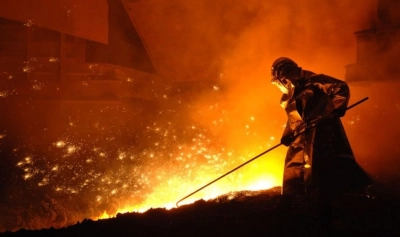
Sursă foto: boursier.com
Distribuie articolul


Distribuie articolul


București 8°C
8°C
8°CArticole Similare

8
ASE's Dobrea : The ASPES financial education programme will be extended nationwide
8

10
Medical costs prompt Romanians to delay doctor visits (survey)
10

12
Chinese ambassador, Botosani County Council president discuss business opportunities tied to Ukraine's reconstruction
12

8
Budget2026/ Grindeanu calls coalition meeting on Thursday at Parliament (sources)
8

12
Romanian public broadcaster defends Eurovision entry 'Choke Me' as "a metaphor"
12

14
Kelemen Hunor: Budget will definitely pass, coalition will move forward with Bolojan as prime minister
14

19
Drone fragments discovered in Romania after Russia's attacks against Ukraine
19

14
Romania's travel agencies are constantly monitoring situation generated by recent events in Iran
14

11
Parliament-budget2026/LabMin Manole:Votes were expressed as each one considered appropriate,package should not be subject of negotiation
11

15
Troops from Romania , 12 other nations to participate in Sea Shield Black Sea exercise
15

15
The Economist Romania Government Roundtable regional conference, in Bucharest, between March 30 and April 1
15

7
Federation of Romanian Transport Operators proposes capping commercial markups for fuels
7

11
Parliament/Manole:We remain consistent, we have same opinion, same amendment, same objectives
11














Comentează