



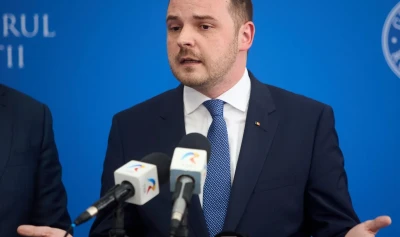


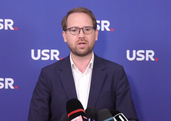
Over 70-75% of the healthcare services demanded by patients in Romania are not in emergency rooms or continual hospitalisation, Health Minister Alexandru Rogobete said on Tuesday, underscoring the importance of specialist outpatient clinics.
The minister participated in the Healthcare Forum 2026 - "The Truth about Romania's Health" event.
"Discrepancies between urban and rural areas, unfortunately, still exist in Romania. And, very importantly, not only in Romania, in many other member states of the European Union. There is a somewhat different access to healthcare services between rural and urban areas. For years, it has only been found and there have been no concrete actions to reduce this gap, on the one hand. On the other hand, specialist outpatient clinics is the key to successfully bridging these gaps. Over 70-75% of the healthcare services that people actually need are not emergency services or requiring continual hospitalisation. The need is for services in the specialist outpatient clinics," said Rogobete.
He added that simple diagnoses will be made in outpatient clinics, treatments can be readjusted, treatments can be monitored, screening and prevention, investigations can be carried out.
"There is no need for hospitalisation and they do not need surgery. We, in the last 20 years, have ignored this important component, namely the specialist outpatient clinics," said the minister.
He added that lately specialist outpatient care has entered an accelerated line of development.
"Under the National Recovery and Resilience Plan (PNRR), 69 specialist outpatient clinics in 69 hospitals have been rehabilitated, equipped, extended and even established. Cumulatively, the 69 hospitals using money under PNRR have rehabilitated, modernised and expanded over 375 offices in specialist outpatient clinics. More than half of these offices are located in rural areas. The investments were geared proportionately urban-rural precisely so as not to widen this discrepancy even more. Regulating the way in which services are provided in the specialist outpatient clinics: increasing the working hours until 20:00, compelling all doctors in the hospital, on a rotational basis, to provide care in the specialist outpatient clinic and, last but not least and perhaps most important of all, increasing the point of payment for the services in the specialist outpatient clinics, which took place in January, an important increase to RON 6.50. Another raise will follow in January next year, to RON 8."
Rogobete said that for over 20 years there has only been talk about screening and tens of millions of euros have been waisted on all kinds of programmes and trainings and an important aspect has been ignored: infrastructure.

"It's useless to have doctors who know how to do screening, and we invest tens of millions in all kinds of workshops in the mountains and at the seaside, if we ignore the infrastructure, because without a real infrastructure, you can't do screening. In the last two years, and especially last year, there has been massive investment in the infrastructure area."
Rogobete added that teams of professionals, professional societies, industry, administrative area of the Ministry of Health are working on the development of the first national screening and prevention strategy that will include several components - the cardio and cerebrovascular areas, oncology, nutrition, diabetes, metabolic diseases, mental health, dental care.























Comentează