



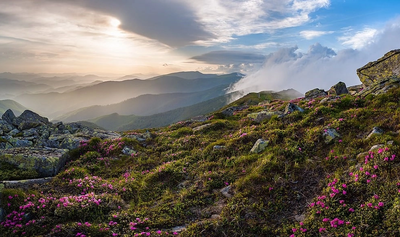


Ecosystems across Europe are already responding to climate warming, with the fastest changes - up to five times more pronounced - recorded in alpine areas, including the Carpathians, according to a study recently published in the journal Nature by a team that includes researchers from Babes-Bolyai University in Cluj-Napoca.
According to a university press release issued on Friday, the study is based on the analysis of over 6,000 vegetation plots from forests, grasslands and alpine ecosystems in the Carpathians, Alps and Pyrenees, monitored over the long term (between 15 and 78 years).
The findings show that the process of 'thermophilisation' - an increase in the share of species adapted to higher temperatures - is present across all ecosystem types, though with varying intensity. In forests and grasslands, changes are moderate and mainly reflected in the emergence of new species adapted to warmer conditions. By contrast, in alpine ecosystems, transformations are much faster and more complex, up to five times more pronounced, the source notes.
The study shows that alpine ecosystems in the Carpathians are among the areas where these changes have been directly documented, with a decline in cold-adapted species and a shift in plant community structures, these ecosystems acting as early indicators of climate change effects.
The research team included Professor Mihai Puscas and Dr Pavel Dan Turtureanu from the Alexandru Borza Botanical Garden and the Faculty of Biology and Geology, as well as Dr Tudor Ursu from the Biological Research Institute in Cluj-Napoca.





























Comentează