



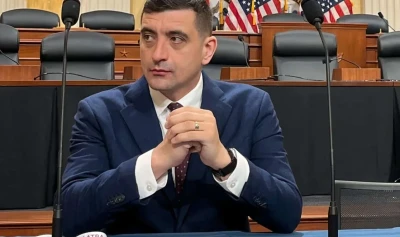


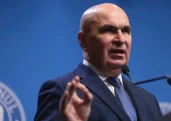
AUR President George Simion sent a message on the occasion of International Holocaust Remembrance Day – January 27, 2026
”Today, the world marks International Holocaust Remembrance Day—a day of solemn reflection on the six million Jews murdered by the Nazi regime and its collaborators, alongside the many other victims persecuted and annihilated in the Holocaust.
The Holocaust did not begin with camps and deportations; it began with words—dehumanization, propaganda, intimidation, and the normalization of hatred. It advanced when institutions failed, when fear overcame conscience, and when too many people looked away.
For today’s younger generations, remembrance is not automatic. It must be taught, protected, and renewed. We have an obligation to ensure that the truth of the Holocaust is preserved against denial, distortion, and indifference.
“Never Again” is not a slogan. It is a commitment—one that requires vigilance in the present. Any real, concrete manifestation of antisemitism must be confronted without exception: in public discourse, in institutions, online, and in our communities. There is no acceptable form of antisemitism.
At the same time, credibility matters in the fight against antisemitism. Accusations of antisemitism are serious and must be handled with care. Jewish organizations and community leaders carry a responsibility to protect their communities, but they also have a duty to verify claims thoroughly, seeking evidence and, where appropriate, engaging directly with the person or institution accused, before issuing public statements or directing appeals to senior decision-makers. We strengthen the cause when we are rigorous, fair, and factual; we weaken it when allegations are made without due diligence.
A note on clarity: in recent years, I have observed moments of inconsistency between statements issued by high officials of the State of Israel and those issued by prominent Jewish organizations in the United States or Europe. When messages diverge, it can create confusion and slow coordinated action. Combating antisemitism requires unity of purpose and precision of language.


We must also be honest about where the most dangerous threats come from today. Antisemitism appears on the extremes of the political spectrum and across societies. But we should not ignore the reality that radical Islamist extremism—particularly linked to the Muslim Brotherhood—has contributed heavily to intimidation and violence targeting Jewish communities around the world. This threat is serious and must be addressed through lawful, democratic means: security cooperation, counter-radicalization, enforcement against hate crimes, and the protection of vulnerable communities.
Finally, we cannot defeat antisemitism with double standards. If antisemitism is condemned when it comes from one political camp, it must be condemned when it comes from any camp. The credibility of this fight depends on consistency—whether the offender is powerful or marginal, whether it is convenient or uncomfortable to speak.
On this day of remembrance, we also honor the survivors, the living witnesses of an unfathomable crime. There are fewer with us each year. They deserve not only our respect, but our action: to protect truth, to defend dignity, and to ensure that Jewish life can flourish in safety and freedom.
We remember. We confront hatred. And we renew a promise that must never be allowed to fade:
Never Again.
Signed,
George Simion


















Comentează