



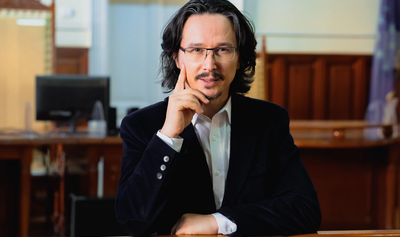


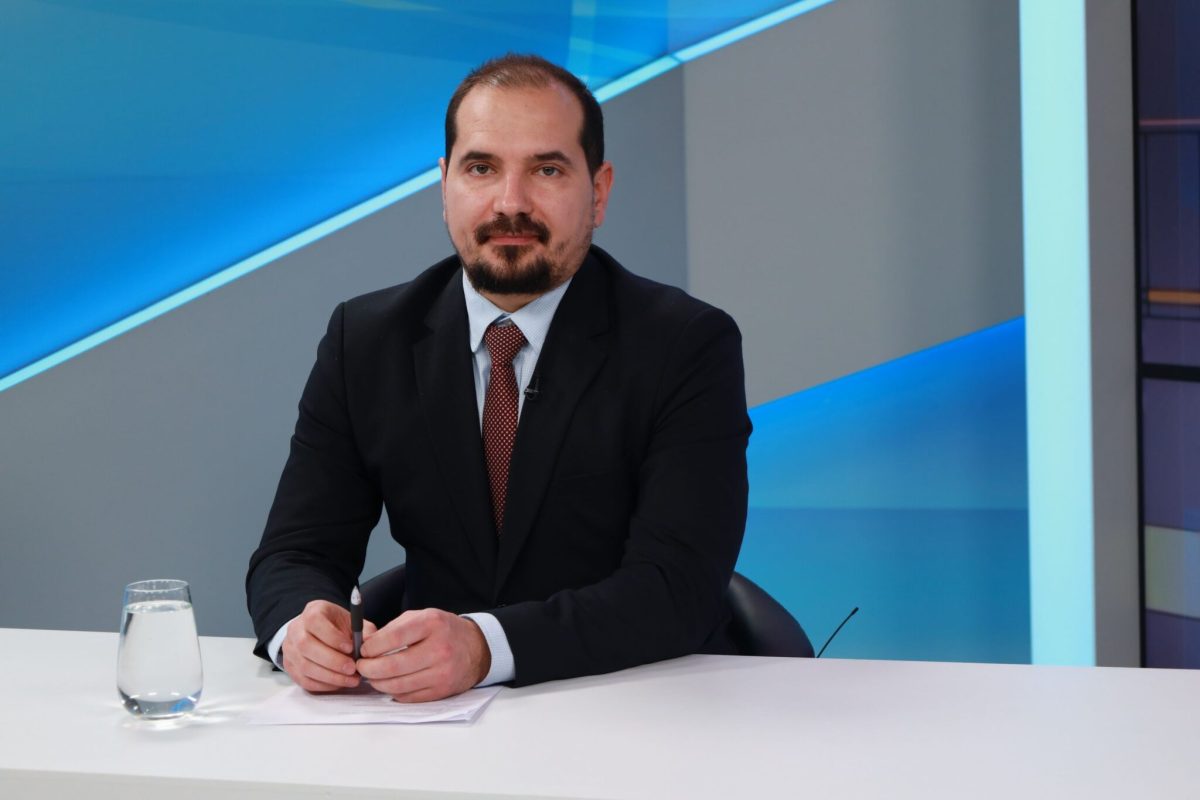
Former judge Cristi Danilet has called on the President of the Supreme Court, Lia Savonea, to resign from the judiciary, accusing her of violating his rights when she sanctioned him in 2019 for expressing an opinion.
Cristi Danilet launched a sharp attack on Savonea on Tuesday in an open letter addressed to her, published on Facebook.
The post comes a day after the Grand Chamber of the European Court of Human Rights (ECHR) ruled in Danilet's favour, establishing that judges are entitled to comment publicly, including on social media, on matters of general interest.
"Madam Savonea, on 15 December 2025, the highest judicial body at European level - the ECHR Grand Chamber, composed of 17 judges from various European states - ruled that you, as a member of the disciplinary section of the Superior Council of Magistracy (CSM) which sanctioned a Romanian judge, violated not merely legal rights but human rights. The ruling concerns me, a judge with an irreproachable career, involved in judicial reform and the fight against corruption since 2003, whom you sanctioned without any acceptable grounds. The Grand Chamber found that you were wrong, and I remind you that your decision blocked my career progression for three years and was subsequently treated as a precedent in later cases concerning me. You may not recall that this initial case concerned a statement I made about the political capture of the secret services and the judiciary, and preparations to extend control over the army. You argued that my public remarks regarding the army damaged the image of the judiciary, despite witness testimony to the contrary. Madam, I do not know whether you are aware of this, but the Army and the Judiciary are separate institutions, and criticism of one cannot affect the other. Beyond my own position, the Grand Chamber has now ruled definitively, with precedent-setting effect across Europe, that judges are free to participate in public debate and that the CSM may not censor this right," Danilet said in his message.
Danilet accused Savonea of violating his rights and noted that it took six years to prove her wrongdoing.
In this context, he added that Savonea should no longer hold the position of judge, and even less so the presidency of the High Court of Cassation and Justice (ICCJ).
"Now the ruling is public. You must fulfil what you promised in your interviews: take responsibility as a judge proven to have violated a citizen's rights. I believe you will agree that you cannot continue as a judge in Romania, let alone as president of the ICCJ and representative of the judiciary. The manner in which you acted during the trial and motivated that decision bears no relation to the conduct of a competent and responsible magistrate. I hope that after reading this letter, you will write your resignation and retire. This is the only good action you can take now, following the disaster documented in the Recorder report of 9 December 2025 and the way you ruined my career six years ago. With no consideration, Cristi Danilet, former judge, illegally sanctioned by you for expressing an opinion," Danilet added.


In 2021, Cristi Danilet - then still a judge, who retired in January 2024 - took Romania to the ECHR after being sanctioned in 2019 by the CSM (then headed by Lia Savonea) for posting two messages on Facebook.
On Monday, the ECHR ruled in his favour, confirming that judges may comment on matters of general interest on social media.
"Today's judgment clarifies that, although judges are subject to a general duty of reserve, they may publicly comment, including on social media, on matters of general interest. The ruling issued today is final. The standards set by the Grand Chamber will have binding effect for all 46 member states of the Council of Europe, including Romania. The Grand Chamber's decision marks a key moment in ECHR jurisprudence on Article 10 and the status of judges, with the potential to consolidate or redefine European standards regarding freedom of expression for judges and prosecutors in democratic societies. The case concerns a judge's freedom of expression and the extent to which the state may sanction judges for opinions expressed publicly," explained Danilet's lawyer, Nicoleta Popescu.















Comentează