



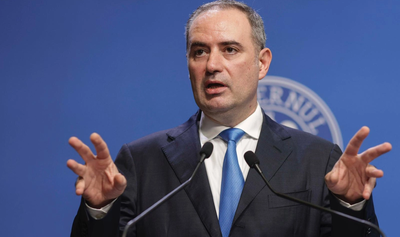


Public debt does not rise overnight and is not the result of a single decision, Finance Minister Alexandru Nazare said in a Facebook post on Wednesday.
Exceeding the 60% threshold is the effect of past accumulations rather than a consequence of any specific decision in recent months, he added.
'Romania's public debt surpassing 60% of GDP does not signal a crisis. What it signals, instead, is that the state has spent more than it collected, and the difference was financed through borrowing. And these borrowings accumulate (...). Today's level reflects the accumulation of very large deficits in previous years, culminating in 2024, when Romania closed the year with a deficit of 9.3% of GDP, combined with very weak economic growth (0.9%). Alongside this, Romania experienced consecutive years of expansionary fiscal policies, continuous increases in expenditure, delaying necessary corrections out of fear of electoral consequences,' Nazare explained on his Facebook page.
He emphasised that the current government's primary objective has been to halt this trend and restore budgetary order, in a context where, last summer, the risk of the country being downgraded to 'junk' status was real, which would have meant higher interest rates, increased costs for the state, and, implicitly, additional pressure on the economy.
'Avoiding that scenario was essential - we ended the year with the country's rating reconfirmed, payments up to date, and record investments. In 2025, we significantly reduced the deficit and brought fiscal adjustment back onto the trajectory agreed with the European Commission,' the Finance Minister added.
He also noted that all rating agencies have repeatedly stressed that stability and predictability are essential for maintaining Romania's investment-grade rating and warned that instability and alarmist messages can have direct effects on financing costs and investor confidence.


Public administration debt (government debt) rose in November 2025 to 1,121 billion lei, up from 1,116 billion lei in the previous month, according to data published by the Ministry of Finance. As a percentage of GDP, government debt increased to 60.2%, from 60% in August (according to the National Institute of Statistics' press release of 6 January 2026).
Domestic public administration debt stood at 551.6 billion lei (546.22 billion lei in October 2025), representing 29.6% of GDP (29.3% in the previous month), while external debt was 569.84 billion lei (570.31 billion lei in the previous month), representing 30.6% of GDP (similar to the October figure).


























Comentează