



The European Commission is set to unveil on July 16 the next long-term EU financial plan, which will also include allocations for fighting poverty, and in 2026 it will launch the first European Anti-poverty Strategy and the first European Affordable Housing Plan, Roxana Minzatu - European Commission Executive Vice-President for Social Rights, Skills, Quality Jobs and Preparedness told AGERPRES in an interview on Monday.
The EU official said that next year the Commission will also initiate a package of measures to support teachers - the EU Teachers and Trainers Agenda for better working conditions, and is considering regulations for the award of a single vocational education and training diploma, recognized all across Europe, thus creating instruments to help with labor mobility within the Union.
Following her participation on Monday in the "Skills4Water - Competences for the Future" panel of the Danube-Eastern Europe Regional Water Forum in Bucharest, Commissioner Minzatu spoke in the interview about education and careers in the Water sector, and of ways to address the shortage of specialized workforce, stressing that Romania has several hundred million euros at its disposal, earmarked for the professional training of adults, and voicing hopes that these resources are put to good use.
"When we see that a water or sewage network is not completed on time or does not work as we want, or does not deliver water at the desired quality, it may also be because the company did not have a sufficiently well-trained design engineer, or the said specialist had too heavy a workload, with lots of projects requiring their attention and did not dedicate enough time to the project, or maybe there were not enough specialists for the approval & authorization part, or the construction company did not have enough, or sufficiently trained personnel," Minzatu said, and went on to note that the Commission expects all the member states to prioritize the Water sector, which is important not only for public health and survival, but is of strategic importance. Romania, in particular, has plenty of water resources and a noteworthy expertise, and it would be a shame for this to go lost, together with the available European funding, the EU official remarked.
Regarding the NRRP, she advised that as the implementation of this facility ends in August 2026, plans can still be wisely modified to ensure that what can be completed by August 2026 stays in place. The European Commission has adopted a series of recommendations, advising member states what can happen with the amounts left unspent by that deadline, so that they can still be used in the economy, Minzatu said.
Speaking of Romania potentially becoming a regional training hub in the Water sector for countries in this area, using the European cohesion and Erasmus+ funds, Minzatu said that Romania, Bulgaria, Greece, Hungary can shape a certain type of regional leadership in defining European policies in the field of water. Water resources are critical and can ultimately become threats if they are not managed correctly, not only due to drought or floods, but also through other types of vulnerabilities, she said.
"Within this framework, the Commission expects member states to come up with initiatives on investments in technology companies - and we need innovative technology in terms of water. Water is not an infinite resource. It is finite. (...) We need to innovate, to implement technologies that can achieve the same results with less water or without water at all, in order to be able to protect our water resources. The European Union's strategy on the resilience of the water sector includes proposals aimed at water circularity, that is, treated water, urban wastewater could be filtered and reused," the EC official said, stressing that she wants and hopes that Romania is able to claim regional leadership in everything the Water sector means.
Speaking of digitalization and artificial intelligence and the major changes they will produce in the field of labor, Minzatu said that according to available estimates, in the immediate to the mid-term future, about 60% of the jobs will be impacted by artificial intelligence, which will assist in the daily tasks. Yet she remarked that there are also jobs where the tasks are set and coordinated by an algorithm, that is by AI.
"At European level, there is an entire debate about the working conditions in such a job and on whether we need to come up with legislation, with minimum legal standards at European level, to protect the human worker, because in the future we will have the human worker and the AI worker. We must not forget that in the end, everything revolves around the protection of rights and privacy, the rights of the human worker," Minzatu said, stressing that this is a highly important topic that looks at a very disruptive field, which in just a few years will undergo tremendous transformation, and not necessarily linear.
Tackling the shortcomings in education and vocational training and the recovery of delays and gaps in terms of skills and workforce, the EU official said that the shortage or crisis of education personnel affects all the member states, mainly because of the aging workforce, and because being a teacher has become an increasingly challenging job. "In 2026 we will put out a package of measures - the EU Teachers and Trainers Agenda, introducing better working conditions for teachers. (...) We need to discuss with the Labor, the Finance, and Education ministers about how to make the teaching career attractive so that young people enter and stay in this sector and work as teachers for a number of years, because otherwise we cannot hold very high ambitions for education," Minzatu explained.
She also mentioned the issues Romania still has regarding the very large gap between urban and rural areas, much weaker access to quality education for rural residents or for certain categories that are more vulnerable, affected by poverty, those who come from migrant parents, or the Roma ethnics who are still deprived of quality educational services.
Regarding the measures envisaged by Brussels to facilitate labor mobility within the European Union, Minzatu referred to the recently launched Skills Union initiative, the EU strategy on lifelong skills and vocational training. "An important pillar concerns the portability of skills," she said, pointing out that when it comes to the EU-wide recognition of professional qualifications, knowledge, expertise or diplomas, the workers still encounter all kinds of barriers that are time-consuming. This is why next year the Commission will come up with an initiative for the automatic recognition of the skills that are ultimately part of a qualification, to facilitate worker mobility, Minzatu continued.
Asked about the Commission's measures to combat poverty and those regarding affordable housing, Minzatu cited some "frightening statistics" of one hundred million Europeans who are at risk of poverty and social exclusion, stressing that the first European anti-poverty strategy and the first plan regarding housing affordability will be released next year. "For this, we need a budget and very, a very intelligent budget-design approach. The European Commission will present on July 16 the long-term EU financial plan where we need to see what funds to allocate for fighting poverty and ensure access to housing, especially in large cities. (...) We are working with the European Investment Bank, with the EBRD, with institutions capable of creating attractive financial products the member states can translate into national programs for investment in social housing and energy efficiency."
"The security of the European Union also depends on how we manage to support every citizen, whether they live in the backcountry or in the city, whether they are in the west, east, north or south of Europe, so that they enjoy a decent minimum standard of living."
As to the creation of a skills union within the EU, Minzatu said that the project is just at the beginning and still comes against conservative reactions from some member states, but stressed that the uniformity of skills requirements in a given industry calls for training capable to ensure the same qualitative level in all the states, and giving the industries the oxygen they need.
"We want Europe to enjoy strategic autonomy economy-wise, that is to no longer depend on suppliers outside its borders. For this, it needs skilled workforce. However, if there is a shortage of supply in one country or poorly trained employees in another state, the chain is affected. This is why we need concerted European action and a union of skills. We are working on this with the ministers, with member states, with the European Parliament. The Commission is only part of this trio, but we are ambitious and we are confident that in the end we will manage to set up this union of skills," Roxana Minzatu said in conclusion.
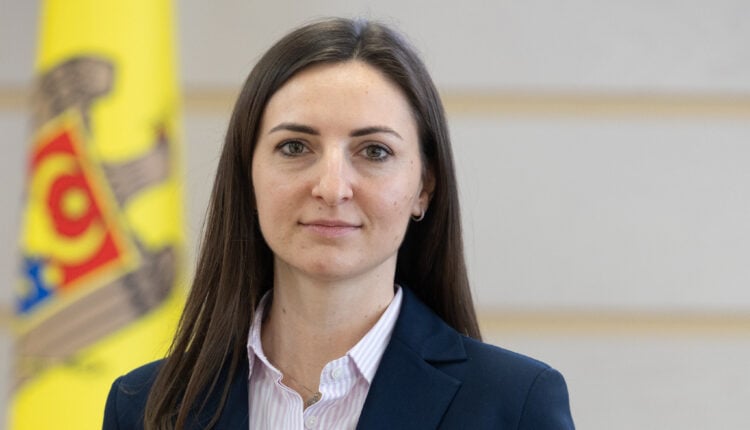
Commissioner Minzatu discusses EU plans to address poverty and social exclusion, with a specific focus on housing

Sursă foto: Gazeta de Cluj
Distribuie articolul


Distribuie articolul

Articole Similare

7
President Dan on joining Peace Council: We are still in talks with the American side
7

6
Romanian consumers overwhelmed by fear of war, economic instability (study)
6
12
First hyperbaric chamber in Romania built with 5 million euros European funds
12

10
Culture Minister pays visits to Peles Castle and Bran Castle; several urgencies remain unresolved
10

7
Romania, Greece sign memorandum to strengthen cooperation in energy field
7

4
Specialists release guidelines on responsible use of artificial intelligence
4

12
Romania to take over South-East European Cooperation Process Chairmanship-in-Office as of 1 July
12

10
Police conduct searches in case involving fruit with high pesticide levels allegedly from Egypt
10

15
APIA to present on Thursday forecast of Romania's car market in 2026
15

18
Romania's participation in Board of Peace meeting - depending on country's role in this format (sources)
18

9
Romanian Tourism Fair to start at Romexpo
9
7
President Dan to attend informal European Council meeting
7
30
Romanian entities owned by Lukoil Group placed under extended government supervision
30










Comentează