



Opening new embassies in Nepal, Bangladesh and Sri Lanka, supporting manpower recruitment firms, and strengthening the policy framework to protect the rights of migrant workers are some of the proposals put forward in a letter addressed on Friday to President Nicusor Dan and Foreign Minister Oana Toiu by a group of over 20 civil society associations active in the field of human rights and social services.
"The signatory organizations raise the issue of Romania's diplomatic representation in the source countries for immigrant workers. Romania has been facing a labor shortage for several years now, especially in sectors like production, construction, trade, hospitality, and administrative and support services. This is the reason why Romania allocates increased quotas of work immigration visas to third-country citizens. The annual quota of permits for newly admitted foreign workers has increased fivefold from 2021 to the present, standing at 100,000 in the last two years, and is based on concrete requests from Romanian employers," the letter states, agerpres reports.
However, the signatories remark that Romania has not developed diplomatic, consular relations and/or bilateral agreements with the main source countries for this workforce, including by posting labor attachés, as it should have been fit.
The letter presents the situation as of mid-2025 by the number of authorized workers, the top source countries being Nepal, Sri Lanka, India, Bangladesh and Türkiye (not including the Republic of Moldova, which has a special situation), noting that the diplomatic representation in these countries is virtually too limited to allow the proper handling of labor import matters.
According to the cited document, other labor source countries where Romania has a limited and/or insufficient presence are Ethiopia, the Philippines, Egypt, Morocco, Tunisia. "It should be noted that, in general, there is a symmetry of representation. Therefore, the countries in question do not have a diplomatic presence in Romania either," the document states.
"As can be seen, Romania is insufficiently represented in the main source countries, especially those in the geographical area known as the Indian subcontinent, which provides almost 80% of third-country migrant workers. The situation is the same in other countries in Southeast Asia, and this has important negative consequences on three levels: risks regarding security, crime and human trafficking; failure to respect the fundamental rights of immigrants and high costs for the Romanian business environment," the signatories of the document write.
According to the civil society representatives, "these problems will grow even more acute in the coming years, as all economic forecasts show that the labor shortage will increase".
In order to proactively address this issue, Romania has the instrument of diplomacy at its disposal and can learn from the examples of EU member states, including from its own agreements concluded before joining the Union with the countries to which Romanians emigrated for work, the letter also states.
The signatories request the expedited examination of the need for concrete steps to strengthen Romania's diplomatic presence in the workforce source countries including: opening new embassies in states such as Nepal, Bangladesh, Sri Lanka, with specific responsibilities in the field of labor; initiating consultations with other EU Member States which take in workforce from the same countries, in order to find the most efficient forms of joint representation; appointing attachés on labor and social issues to the current and new embassies, in order to facilitate the correct recruitment of people wishing to work in Romania; initiating steps to conclude bilateral agreements with workforce source countries in this area; active involvement of labor institutions in supporting the efforts of recruitment companies; permanent structured dialogue with unions, employers and human rights organizations, in order to strengthen the policy and legislative framework for protecting the fundamental rights of immigrant workers.
Some of the letter's signatories are ActiveWatch Association, Respiro Human Rights Research Centre Association, Legal Resources Center, Center for Public Innovation, Center for Comparative Study of Migration, Center for Civic Resources, CeRe: Resource Center for Public Participation, Caritas Romania Confederation, Romanian National Council for Refugees, Foundation for Civil Society Development.
Civil society suggests enhanced Romanian diplomatic representation in migrant-worker source countries
Autor: Alecsandru Ionescu
Publicat: 05-09-2025
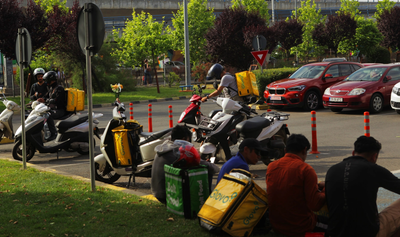
Sursă foto: Mihai Pogan / Riseproject.ro
Distribuie articolul


Distribuie articolul

Articole Similare

5
DeputyPM Tánczos Barna:We have economic recovery package with budget of one billion euros for investments
5

21
Pîslaru: Romania officially lost 231 million euros due to new scam by High Court of Justice
21

10
Euro trades at RON 5.0914
10

6
European 112 Day to be marked by illuminating in red more than 140 emblematic buildings
6

9
Senate adopts in plenary session legislative proposal establishing 2026 as "Bishop Márton Áron Year"
9
11
AgriMin Barbu says MADR completed its reorganisation, it cannot bear a 10% cut to wage fund
11
11
ANCOM: Number of registered postal items in Romania exceeds 600 million in 2025
11

7
Babes-Bolyai University researchers show how tourism companies can gain travellers' trust
7

11
BVB opens higher on Wednesday
11

14
Romanians are increasingly vulnerable to everyday risks - families facing difficult situations need 165,400 lei
14

19
Giant brain tumour removed at Iasi Neurosurgery Hospital
19

14
EnvironMin Buzoianu: Nearly one billion euro to be invested from PNRR in water and sewerage
14

20
Capital's Sector 6 four-storey block of flats to be regenerated using biological method
20










Comentează