






The year 2025 was marked by an unprecedented succession of extreme weather phenomena (heatwaves, severe drought and episodes of intense rainfall), confirming a trend of accelerated warming and increasingly pronounced weather variability, according to official data from the National Meteorological Administration (ANM), said Agerpres.
According to a press release sent to AGERPRES, 2025 ranks among the warmest years on record in Romania, being the fourth warmest year since measurements began in 1901, with an average annual temperature of 11.95 degrees Celsius and a positive deviation of +1.22 degrees Celsius compared with the 1991-2020 average.
The 2012-2025 interval represents the warmest 14 consecutive years in the history of national meteorological observations, indicating a structural shift in the thermal regime and ruling out the hypothesis of an isolated fluctuation, the source added.
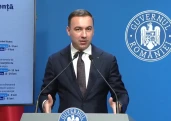
"2025 shows how rapidly weather patterns are changing in Romania. We are not only talking about higher temperatures, but about an increasingly risky combination of heatwaves, water scarcity and violent rainfall over very short periods. This forces us to rethink how we manage water, soil and disaster protection infrastructure. From the first day of my mandate, I have sought to bring leading climate change specialists closer to the Ministry of the Environment, capable of providing science- and data-based solutions. It is a first for our institution to involve such experts. In the coming period, we will present the first concrete result of the work carried out over recent months: forest management regulations, as forests are increasingly affected by climate change," said Environment, Waters and Forests Minister Diana Buzoianu, quoted in the press release.
According to ANM, the long-term trend is clear, as over the past 30 years the average annual temperature in Romania has increased by +0.54 degrees Celsius compared with the 1981-2010 period, and by +0.49 degrees Celsius in Bucharest. This evolution has translated into frequent temperature records at daily, monthly, seasonal and annual levels.


"July 2025 was marked by extreme heat, with six general red code warnings and maximum values of up to 43.4 degrees Celsius in Calafat, as well as over 41 degrees Celsius at numerous stations in the south and west of the country. At the same time, episodes of violent storms were recorded, with gusts exceeding 150 km/h in Banloc and 100 km/h in several mountainous and western areas,' the document further notes.
ANM points out that drought was one of the defining characteristics of the year.
"There were seven dry months, and June 2025 was the driest month on record, with only 18.9 mm of precipitation compared with the climatological average of 90.5 mm. Summer 2025 was the fourth driest summer recorded nationwide, with Dobrogea being the most affected region, registering an average of just 34.3 mm of rainfall," the document adds.
At the opposite end of the spectrum, 2025 also brought episodes of extreme precipitation.
"May was among the rainiest months of recent decades, while October 2025 set new regional and national records. In the first ten days of October, more than 100 litres per square metre were recorded at 51 meteorological stations, and in several locations historical 24-hour precipitation maxima were exceeded. This alternation between drought and torrential rain also explains the high number of weather warnings: in 2025, a total of 170 general warnings (14 red code) and 3,521 nowcasting warnings (77 red code) were issued, the highest level in recent years," the press release further states.





























Comentează