



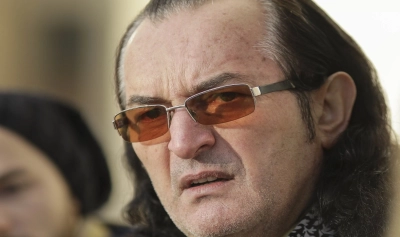


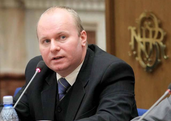
Adrian Sarbu, former head of cabinet for former prime minister Petre Roman, and Miron Cozma, former leader of the miners from the Jiu Valley, were summoned on Friday to the General Prosecutor's Office to be informed that they are indicted in the case of the June 1990 Mineriad for committing crimes against humanity.
Prosecutors need to redo the investigation in this case after the gathered evidence was annulled in court.
Initially, in June 2017, the case was sent to court, but in December 2020, the Supreme Court ordered the return of the case to the Military Prosecutor's Office for the investigation to be restarted from scratch.
So far, former president Ion Iliescu, former prime minister Petre Roman, retired General Vasile Dobrinoiu, former commander of the Ministry of Internal Affairs' Higher Military Officers' School, and retired Colonel Petre Peter, former commander of the Military Unit 0575 Magurele, have been re-indicted.
Since he is unable to move, Ion Iliescu was visited by prosecutors at his home on Wednesday.
Prosecutors argue that in June 1990, individuals in decision-making positions within the Romanian state at that time launched a policy of repression against the civilian population in the Capital, as a result of which 4 people were killed, 2 were raped, the physical and/or mental integrity of over 1,300 people was harmed, and over 1,200 people were persecuted by being unlawfully deprived of their freedom.
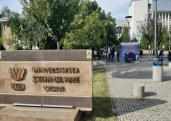
Starting with April 22, 1990, a protest took place in University Square in Bucharest, lasting several weeks until June 13, 1990. The protest was aimed at opposing the newly established government in Romania after the 1989 Revolution, with protesters verbally demanding, through statements and other forms of protest, the break from the communist regime that had just been replaced in December 1989, the promotion of people without a background in party activism, the establishment of a free television station, and other similar demands of a democratic nature.

In this context, Ion Iliescu, Petre Roman, and other figures in the leadership of the state or the National Salvation Front launched an attack against the protesters physically present in University Square, which actually served as a pretext to conceal the repressive action against individuals who had previously participated in these protests, especially opinion leaders, as well as against anyone who manifested or was suspected of manifesting any form of opposition, particularly students, intellectuals, or those expressing affinity with Western values, investigators indicate.
Given the scale of the attack, its implementation required the involvement of a very large number of people. In this regard, individuals in the state leadership allegedly formed, according to the evidence presented, a systemic, heterogeneous criminal group, with political, administrative, military, and civilian elements, within which a large number of individuals were involved, each contributing in different ways and with varying degrees of involvement to actions that took place on an impressive scale.
roup, but the design and orchestration of the commission of the crimes was the responsibility of the political leadership of the Romanian state at the time, through the mentioned individuals. The acts carried out by the prosecutors show complicity at the level of planning and orchestrating the criminal plan, and the method chosen for its implementation was through the use of other individuals who were not part of the conspiracy. Thus, starting on June 13, 1990, a repressive action was carried out against the protesters in University Square in Bucharest. This attack illegally involved forces from the Ministry of Internal Affairs, the Ministry of National Defence, the Romanian Intelligence Service, as well as over ten thousand miners and other workers from various regions of the country," explains the Prosecutor's Office.
The repressive action had the character of a widespread and systematic attack, during which 4 people were killed by gunfire, 2 were raped, and 1,311 people were physically or psychologically harmed.
Additionally, 1,211 individuals were persecuted through illegal deprivation of liberty. Thus, on the morning of June 13, 1990, over two hundred people were detained and transported to the Military Unit 0575 Magurele of the Ministry of Internal Affairs, where they were held until the afternoon of the same day, when they were allowed to leave after a brief interrogation.
Moreover, workers from the Bucharest Heavy Machinery Plant were brought to University Square, where they acted violently, physically assaulting individuals in the vicinity of the Institute of Architecture, after which they occupied University Square alongside the law enforcement forces to prevent the return of the protesters. The actions of the state authorities prompted a violent retaliation from the opposition, which led to the burning of the headquarters of the Capital Police, the Ministry of Internal Affairs, Romanian Television, and the Romanian Intelligence Service. The law enforcement forces used firearms with military ammunition, during which 4 people were fatally shot.
The repression by the authorities continued on June 14 and 15, 1990, through a systematic attack carried out with miners and workers from several counties of the country, who had become a true parallel law enforcement force, alongside those recognised and legally organised.
In this context, the miners brought to Bucharest destroyed the offices of political parties newly established or re-established after the December 1989 Revolution and which were in opposition, the homes of the main opposition political leaders, and the offices of independent press publications and educational institutions.




















Comentează