



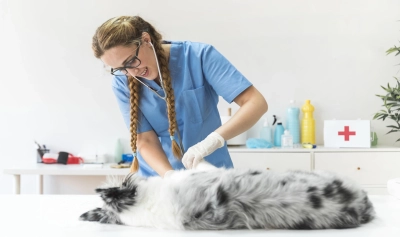


Veterinarians are protesting on Monday in Victoriei Square, accusing the reduction of funding and the lack of professional consultation in the veterinary field, the College of Veterinarians (CMV) announced on Monday.
According to a press release sent to AGERPRES, among the main demands is the adoption of GEO 89/2025, which was made without the advisory opinion of the CMV, although the legislation in force provides for this.
The College of Veterinarians has the responsibility of giving advisory opinions on draft normative acts, regulations and rules for exercising the profession in all specific veterinary fields of activity, the cited source mentions.
The representatives of the profession also complain about the lack of respect for the principles of decision-making transparency, pointing out that the project was published on the website of the Ministry of Public Finance a day before its adoption. "The adoption was made without respecting the provisions regarding decision-making transparency in public administration," the organizers of the protest state.
The veterinarians also claim that the economic impact assessment on small and medium-sized enterprises was not carried out, as required by the legislation. In this context, they point out that "the initiator of the regulatory act was obliged to publish the results of the Test for small and medium-sized enterprises and the opinion of the Economic Impact Assessment Group".
Another reason invoked concerns the impact of ongoing concession contracts. According to the cited source, the financial offer is an integral part of the contracts signed for a period of four years, and "concluded and valid concession contracts represent the law of the parties". At the time of the adoption of the contested measures, over two thousand four hundred concession contracts were in progress.
At the same time, the protesters affirm that the state has the obligation to support the activity of protecting animal health, of surveillance, prevention and control of diseases transmissible from animals to humans. The state must ensure the institutional and legal framework, the financial resources and the technical and material base necessary for the development of sanitary-veterinary activities, they maintain.


Veterinarians also accuse the lack of justification for the urgency of adopting the measures that led to the 50% reduction in the amount granted to veterinary medical units carrying out activities under the national strategic program. According to them, "the unilateral reduction in funding makes it impossible to effectively exercise the concessioned economic activity and erodes the right recognized by law."
According to the cited source, the reduction in funding will have a major economic, social and professional impact. Veterinarians warn that the measure will reduce the attractiveness of participating in public tenders, discourage young doctors from settling in rural areas and lead to layoffs among veterinary staff. "Work without individual contracts will be encouraged, since from the gross and taxable amount of 5,000 lei, even a salary of 3,000 lei net/month cannot be ensured," they claim.
At the same time, animal owners will no longer benefit from the prompt and quality services of veterinarians, as their number will be reduced and travel distances will be very long, and consequently the costs borne by animal owners will increase, the document also states.
Protesters also warn that pet owners will have limited access to veterinary services, and the number of unlicensed veterinary districts will increase. In this context, animals will no longer be properly tested and vaccinated, posing a risk of disease transmission to humans and the emergence of serious cases.
"The number of contract-free sanitary-veterinary districts (370 out of 2,803 at this time) will increase and animals in households will no longer be tested for diseases with an impact on public health or trade, such as tuberculosis, brucellosis, leukosis, etc. Animals will no longer be vaccinated against anthrax or rabies, as there is a risk of transmission to humans and the occurrence of deaths in humans," the statement states.
Veterinarians also point out that animals will no longer be identified and registered within the deadlines provided for by the legislation, which will affect the granting of subsidies and the activity of peasant households. At the same time, they warn of the risk of major disease outbreaks, which could lead to export restrictions.
The protest is organized by the College of Veterinarians.






















Comentează