



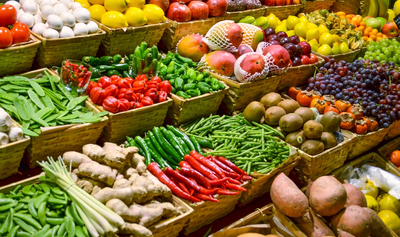


The fruit and vegetable market remains one of the strongest in the fast-moving consumer goods (FMCG) retail, representing 8.1% of Romanians' spending in 2024, amid growing consumer interest in fresh, local and organic products, according to a study conducted by NielsenIQ.
Last year, tomatoes were at the top of Romanians' vegetable preferences, accounting for 17% of total sales in the category, followed by potatoes (15.7%), peppers (10.8%), mushrooms (5.8%), cucumbers (5.6%) and onions (5.5%). In terms of fruits, the podium is dominated by bananas (24%), apples (8.5%) and oranges (6.7%), followed by lemons (6.6%), grapes (6.4%) and melons (5.8%), the cited study reveals. These 12 products generated the majority of sales in the category, agerpres reports.
This dynamic is fueled by retailers' strategy to promote Romanian products, especially in the midst of the domestic season, when a significant part of the chains limits imports to zero for locally available vegetables and fruits.
"Romania has an increasingly mature fruit and vegetable market, but still dependent on logistics infrastructure and production stability. What we see today is the result of a process of over 30 years, in which modern retail has trained and supported entire generations of farmers. The evolution is spectacular, but the challenge remains the strategic planning of production, adapted to real market demand. Only through an approach based on data, collaboration and sustainable investments can we build a competitive and stable sector in the long term," said Maria Hurduc, FMCG specialist, in a statement.
In recent years, partnerships between modern retail and local producers have become an essential pillar in the development of the fruit and vegetable sector. Through programs such as Quality Chains, own brands and associations in agricultural cooperatives, retailers have created a collaborative framework that offers farmers predictability of sales, access to investments and support in the modernization of production processes.

"Constant collaboration has led to the professionalization of the entire chain, from the selection of varieties suitable for the shelf and crop planning, to packaging, logistics and compliance with quality standards. The results are visible: more and more producers are expanding their cultivated areas, diversifying their portfolio and optimizing workflows, contributing to the consolidation of the Romanian offer and reducing dependence on imports," claim the study's authors.
Organic farming in Romania also continues to grow, supported by a new generation of farmers who approach this segment as a solid and sustainable business with a long-term perspective. Retailers support this evolution by expanding organic ranges and launching dedicated organic product lines, used as differentiation and loyalty tools.
Currently, over 850 Romanian organic items are listed in major chains, most of them coming from small and medium-sized farms, oriented towards urban consumers.
According to the cited study, the demand for organic products is growing, and the growing interest in healthy eating and local products confirms the high potential of this segment. In the medium term, the pace of development will depend on investments in certification, infrastructure and consumer education, which can transform organic agriculture into an important engine for the growth of the Romanian fruit and vegetable market.
Despite the visible evolution, the vegetable and fruit market remains vulnerable to climatic factors and the lack of modern storage and irrigation infrastructure. Unstable weather conditions in 2025 significantly affected fruit production, especially cherries, where 2025 was one of the weakest seasons in the last 20 years, peaches, nectarines and apples. On the other hand, for vegetables such as potatoes and melons, overproduction led to price drops below the profitability threshold, the report shows.
"These fluctuations show the fragility of a sector that depends on weather, seasonality and insufficient storage infrastructure, putting pressure on farmers and distribution chains. For example, in the absence of warehouses at European standards, goods must be sold quickly, at low prices, which generates overstocks and losses for the entire commercial chain," the study authors draw attention.
Also, the lack of modern irrigation systems limits productivity even in traditionally fertile areas, which emphasizes the need for integrated planning and coordinated long-term investments.
In this context, Modern Buyer will organize in Bucharest, on November 20, RO Fruits & Vegetables Show 2025, a platform dedicated to solutions and collaboration between producers, retailers and service providers in the industry.





























Comentează