



The European Union budget for 2021-2027 won't be voted by the European Parliament (EP) if it doesn't observe a series of conditions, the Romanian MEPs belonging to the main three political groups of the EP argue, invoking a series of red lines, among which some have an impact at the national and regional level, and others at the EU level.
Siegfried Muresan (Group of the European People's Party -EPP), Carmen Avram (Group of the Progressive Alliance of Socialists and Democrats- S&D) and Dacian Ciolos (Renew Europe Group) responded to some questions regarding some support measures of the EU in the interest of citizens and the importance of combating fake news and misinformation, at a webinar organized by the European Parliament Liaison Office in Romania on Tuesday.
One of these questions referred to the conditions under which the future EU multiannual budget would not get the EP vote, given that the difference between the negotiating position of the EU legislature and that of the EU Council could be clearly seen in recent months.
Vice-Chair of the EPP Group in the EP Siegfried Muresan said that "in order for the EU to be able to do what citizens expect, the EU budget should be allocated exactly in the areas where people expect it."
He reiterated that, together with group leader Manfred Weber, he sent a letter to the European Commission President and the European Council President, in which he mentioned very clearly that the EPP group will vote for the future EU budget only if it meets four conditions simultaneously.
"Firstly, the traditional priorities of the EU should be properly funded, agriculture and the cohesion policy, namely money for motorways, the modernisation of railways, the insulation of block, the extension of water and sewerage networks to villages, modernisation of roads. These things have been and continue to be important," Muresan said.
Secondly, it is necessary "to earmark sufficient European funds for the new priorities of the EU in agreement with the commitments which the Commission, the Council and we, the Parliament, took on in the past months before the people. The Green Deal, namely combating the climate change and environment protection, improving energy efficiency, digitisation, the citizen's safety, defence, all the areas in which we promised people we'll do more."
Thirdly, Muresan said that it is important for sufficient reserves to exist in the EU budget "because seven years is a long period and unforeseen crises will certainly appear, just as they have appeared in the last seven years - the migration and refugee crisis, and now the coronavirus crisis."
The fourth condition put forward by Siegfried Muresan to vote for the budget is "a consistent aid as a result of the coronavirus crisis (...) for enterprises, including the medical component where we have concrete proposals."
"Voting against the EU budget is a nuclear weapon, a weapon you don't want to use, but the EC and the governments of member states need to know the following thing. Parliament is willing to use this important tool that we have if our demands, our conditions are not included in the EU budget for the next years, and these positions are supported by a very large majority in the EP. All three of our groups, plus the Greens to a significant extent, plus the Conservatives," Muresan also said.
Renew Europe group leader Dacian Ciolos also clearly said that "if the budget adopted by the European Council doesn't correspond to the political ambitions which even the Council has stated on several occasions in recent years, the European Parliament will play its part in being responsible (...) rejecting such a budget and demanding another one that complies with these measures."
The Liberty, Unity, Solidarity Party (PLUS) MEP reiterated that the EP tries to be as involved as possible in these talks regarding the future multiannual budget, even it was customary in the past for the EC to propose the project, the Council to debate, amend and approve it, and the legislature community to approve or reject it in the end.
"We asked to be involved in these discussions and this is also the reason why we had a resolution in April to give a clear signal for all areas (...). In May, we had another resolution with broad support, as rarely happens in the EP. Five political groups out of seven, over 500 MEPs out of 705 voted in favour of the resolution, which clearly tells the European Commission and the Council under what conditions the EP will approve the budget. If the budget doesn't get close to what the EP asked, the Renew group which I lead will support the rejection of this budget and the request for another corresponding budget," Ciolos said during the online debate.
Dacian Ciolos reiterated his group's red line in respect to linking the observance of the rule of law to earmarking EU funds, proposed by the Commission, but which isn't unanimously in the EU Council.
"It must be said very clearly. Even if we ask for a consistent budget, the European Union is not an ATM of the member states, distributing money, taking from one side and distributing to another side. The EU is a political project built, in the first place, around some values. And the rule of law, justice, rights and individual freedoms are those values, that foundation on which the economy is built, as well as social projects. And that is why we will not agree to distribute money to some governments and politicians who come to power and use European money by attacking the EU, but distributing the money based on customer criteria without any control," the leader of the Renew Europe group underscored.
In this context, he also mentioned the role which the European Prosector's Office will have to play in checking the manner in which European money is spent.
"That European Prosecutor's Office, headed by Laura Codruta Kovesi and which is ready for duty, for taking on responsibilities, will play an important role in verifying how these funds will be used, which are to be distributed massively to the member states in the coming months," he said.
MEP Carmen Avram of the Progressive Alliance of Socialists and Democrats (S&D) group said that for her, the red line is the budget for agriculture "because until this crisis broke out, the agriculture had become the stepchild of the EU, and everyone was trying to cut back on funding and reduce subsidies of large farmers, who actually provide food for the continent and Romania."
She said that time has come to discuss agriculture in other terms and "not treat farmers as these disobedient children of Europe, taking into account that they carried the burden of providing food for this continent," in the context of the crisis generated by the novel coronavirus.
"Therefore, for me, the red line is the amount granted to agriculture. For my group, the red line will be that Green Deal, which the S&D continues to bet on as being the only way to economic recovery. The green deal could benefit from very large amounts of money and could become an opportunity, including for Romania, but very serious funding is needed," Carmen Avram said.
"As promised by the Commission, it looks like there will be a budget of solidarity. But (...) even if it is a budget of solidarity, it is not necessarily a blank cheque," Camen Avram added.
But what happens if the EU multiannual budget is not adopted by the end of this year?
"If we fail to quickly adopt the budget for the next seven years, we need an emergency budget for one year. The worst thing for the beneficiaries is uncertainty. (...). And that is why the EP, last week, with the support of the three groups we represent, called for a so-called contingency plan, an EU emergency budget for one year, based on the multiannual budget for 2014-2020, with some obvious adjustments - more funds for health, allocation of funds for research and innovation, especially for the medical area," Siegfried Muresan said.
However, he argues that the community executive doesn't want this "contingency plan" because negotiations would be complicated, even if, says Muresan, they "would be much simpler than the negotiations for seven years."
Under what circumstances would EP use 'nuclear weapon' of not voting for EU's multiannual budget
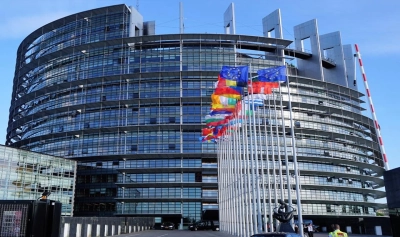
Sursă foto: stiripesurse.ro
Distribuie articolul


Distribuie articolul


București 6°C
6°C
6°CArticole Similare

12
Romanian Embassy in Republic of Moldova: Russia's actions are not abstract or distant, affects everyday life
12

8
FEPAIUS head: Romania's textile industry needs fast investment in digitalisation, circular economy to remain competitive
8
8
We decide to set up inter-institutional group to monitor and control availability of medicines (health minister)
8

8
Sustainable Development Advisory Council expert: Romania in a three-year energy crisis, with a distorted market
8

13
Bucharest Mayor meets Crown Custodian, Prince Radu for talks on infrastructure, transport and energy
13

6
Israel's Embassy: Taking all the steps to bring the Holy Easter Light from Jerusalem
6

8
Pilot project underway to map geothermal potential of shallow groundwater in Crisuri basin
8

7
National Financial Education Program for Romania concludes strategic partnership with John F. Walsh
7
9
Airbus, IAR Brasov explore industrial cooperation on Romania's H225M multirole helicopter project
9
10
One million tourists visit fortified churches of Transylvania in 2025, with most of them Romanian
10

10
AAC warns ordinance reducing gasoline biofuel content harms farmers, poses EU legality issues
10
9
Storage needed as national grid can no longer cope with amount invested in photovoltaic panels
9

8
Florin Jianu (IMM Romania): We want a meeting of the National Tripartite Council to limit fuel prices
8












Comentează