



Romanian households have the highest share of expenses with food items and non-alcoholic beverages in the European Union (25.2% when comparing with the 15% average EU27, the National Bank of Romania (BNR) shows in its "Report on financial stability".
"The accelerated inflation rate, especially for the food items sector, will lead to a decrease in the population's buying power and disposable income, putting pressure on the capacity of covering debt service for people who contracted loans. Romanian households have one of the highest weights allocated to alcoholic beverages and tobacco (5.5%). Additionally, people with smaller income give a higher share of expenses to basic necessities and as such these will be hit harder," the report shows.
According to the source, housing expenses share is placed under the EU27 average (25% as opposed to 32%), including spending with the tap water, electricity and gas, which represent 5.1% of consumption expenses. Despite this, at the end of 2020, 24% of low-income households had difficulties in keeping their homes warm, when comparing with only 6% of households with average and high income. It is important to mention that when comparing with the year of 2020, at the moment of gathering statistics, the price of natural gas has gone up by 85% (April 2022, according to consumption price index), 18% respectively for electricity. As such, it is to be expected that the share of the population that is struggling will continue to go up.
BNR also shows that a high level of heterogeneity is maintaining, from a regional standpoint (households from the Bucharest-Ilfov region reported income which was double from those in the North-Eastern region), as well as between the urban and rural area (urban households have reported income by 50% higher than those from the rural area).
The most important component of over-indebtedness households is represented by the mortgage loans (56% of total, namely 103 billion RON), having the highest increase rate (12%). Consumption loans, representing 34% of the total over-indebtedness households, have gone up by 5% during the period of March 2021 - March 2022, when comparing to a 2% decrease during the year 2020. In the end, loans granted by non-banking financial institutions have a share of 5%, going up by 8.4%.AGERPRES
Romanian households, highest share of expenses with food and non-alcoholic beverages in EU (central bank)
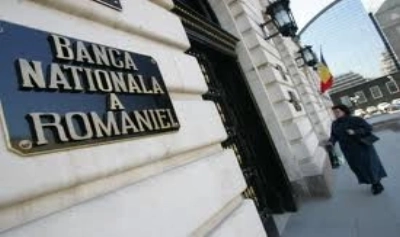
Sursă foto: stiripesurse.ro
Distribuie articolul


Distribuie articolul

Explorează subiectul

București 5°C
5°C
5°CArticole Similare

14
Romania's beekeeping sector struggling after major bee colony losses and declining honey production
14

14
Tulcea County residents receive new message of extreme alert, amid war in Ukraine
14

9
Bucharest Stock Exchange closes lower on most indices in Friday's trading session
9

7
Senate Speaker Abrudean says budget is key to continuing started reforms
7

11
Her Majesty Margareta meets new US Ambassador Nirenberg; talks focus on Romania-US cooperation
11

18
Over 7,400 Romanians - registered for European civil servants; free training sessions (ForMin Toiu)
18

11
Romania provides support to Republic of Moldova over pollution on Dniester River; intervention team arrives in area
11

9
DefMin Miruta meets new U.S. ambassador: Romania is firm promoter of strengthening transatlantic relationship
9

9
First edition of "Robotics for Good: Youth Challenge" in Romania to take place on Sunday in Ramnicu Valcea
9

7
AgriMin Barbu calls on Competition Council to investigate mark-ups along route between farmers and consumers
7
8
PM Bolojan says interconnection of energy networks with neighbouring countries is important in times of crisis
8
11
Budget Committee meetings discussing the 2026 budget will be exclusively in person
11

8
Parliament: 2026 draft budget to be submitted for final vote on Thursday
8















Comentează