



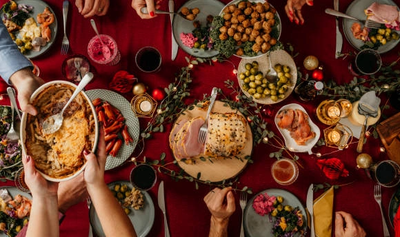


Romania's food industry has significant potential, benefits from well-trained specialists, and produces high-quality food, but requires substantial investment to compete on the European market and reduce its vulnerability to imports.
"We want 2026 to be the year of processing, meaning the food industry should receive the proper attention. We are constantly being criticised for relying on imports. Imports occur because the food industry has not received sufficient funding to meet European standards. All funding programmes must continue, as we have a strong food sector, highly skilled specialists, and the ability to produce top-quality products. With accession to Schengen, there are no longer delays at customs, we have motorways, and we can quickly export to neighbouring countries but without investment, we risk being overtaken," Aurel Popescu, President of the Romanian Food Industry Employers' Federation - Romalimenta, told AGERPRES.
According to him, the biggest potential in Romania's food industry lies in the poultry sector, which is well developed and already active on foreign markets, as well as in the meat industry, though exports here are heavily affected by African swine fever.
"Currently, poultry has the greatest potential, it is very well developed and exported. The meat industry also has potential, but due to swine fever, we are almost blocked from exporting. The bakery sector also has potential, where DR-23 (a measure from the Strategic Plan CAP 2023-2027, aimed at processing and marketing agri-food products) has been launched and projects can already be submitted. Investments must continue to create factories that meet supermarket requirements, because large retail chains no longer hold tenders per country, but by regions: Southeast Europe, Eastern Europe, Southern Europe, etc. Therefore, you need large factories to supply products in Romania, Poland, Bulgaria, and Hungary," Popescu explained.
He added that eradicating African swine fever remains one of the greatest challenges for the meat sector. Without firm solutions, exports are practically blocked and economic losses are significant.
"We need serious exports if we want to balance trade, because it is very unbalanced. The most important thing is for the food and meat industries, together with the Pig Breeders' Association, ANSVSA, and all involved parties in Romania, to analyse what can be done to eradicate swine fever, because the meat industry is ready to operate at full capacity but cannot export. At present, there are countries that do not accept our meat, even if we buy meat externally and the factory is perfect. The situation is serious and must be resolved. It is a pity that after so many years no solution has been found," the Romalimenta president said.
He also warned that high taxes contribute to growing tax evasion.
"This is how we see the situation in Romania's food industry: investments, eradication of swine fever, and reducing taxes, because these drive tax evasion. It is already clear that evasion has increased. In the bakery sector alone, the level is around 40%. Bread consumption cannot have decreased by 10%, I do not believe that. It is true people are saving and it is good that food waste has decreased, but 10% is still a lot. What worries me is that VAT has increased by 2% and evasion by 6-8%," he noted.


Regarding food prices, Popescu stated that Romanian processors cannot raise prices to gain more profit, only to maintain margins. 'Competition is strong and sometimes unfair. The 1% turnover tax affects Romanian products, while imports are unaffected, creating unfair competition. You make no profit but pay the tax. I requested that agriculture and the food industry be exempt from this tax. The promise is that the tax will be reduced to 0.5% in 2026 and fully removed from 2027," he added.
On the issue of capping commercial mark-ups on staple foods, Romalimenta supports lifting the cap.
"My view is that any state intervention in the market, on the commercial side, is not beneficial. The food industry supports removing the cap. If there were a way to introduce a cap across all products, that would be different. It does not affect us, but it would change prices for detergents, clothing, and appliances," Popescu said.
The food industry also faces a labour shortage of around 10%, with automation and robotics identified as the solution.
"We are very involved in this. Without robotics, it is no longer feasible. In the past months, I visited over 10 food factories - for cakes, milling, and chicken - and without full automation, it does not work. We have factories where pressing 4 starts the production recipe. Automation is absolutely necessary, otherwise you cannot compete. This also addresses the labour shortage and productivity. The larger the unit, the higher the productivity," Aurel Popescu explained.
Romania's food industry is among the largest employers in the economy, with around 200,000 employees and a turnover exceeding 30 billion euros.
























Comentează