



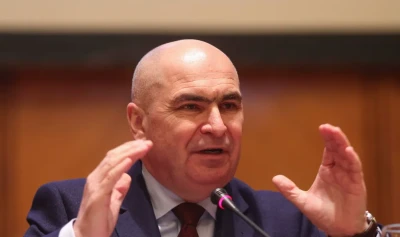


Prime Minister Ilie Bolojan said that in the absence of measures to improve the efficiency of local public administration, the number of communes will be reduced.
'I believe that last year and this year will be decisive years for local public administration, because we have two possibilities: to prove together - and this is not an issue for one prime minister, but for the entire administration - that within the current structures we can be more effective, more efficient and operate with lower costs; or, if we fail to do this, it is only a matter of time, until 2028, after the upcoming elections, when a reform of the administration takes place in one form or another, which will mean reducing the number of communes, mergers and so on. So either we work together to make the administration more efficient within the current framework, or it is only a matter of time before we get there,' the prime minister said at the opening of the 29th ordinary session of the General Assembly of the Association of Communes in Romania.
Bolojan stressed that he knows 'how difficult it is to manage the problems' of a community with limited resources and said that Romania is facing a 'very large' budget deficit, which the Government has committed to correcting.
'The capacity of governments to increase transfers to local authorities is very low, regardless of who the prime minister is and regardless of what coalition we will have in Romania in the coming years. This is because we are in a situation where, if we make comparisons with administrations in other EU countries, we must understand that we have certain indicators which should give any rational person pause. In Romania, the majority of the funds used by local administrations come from transfers from the state budget. This is about 80%, compared with the EU average of around 50%,' the prime minister said.
Ilie Bolojan added that, according to the European Union average, salary costs are covered by revenues obtained from local taxes. By contrast, in Romania, revenues from local taxes cover only a quarter of salary expenditure.



























Comentează