



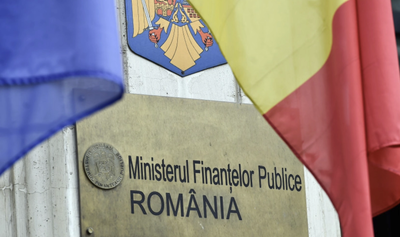


The Ministry of Finance proposes the establishment of the 2026-2028 Program - National Facility for Project Preparation and Technical Assistance for Public-Private Partnerships (PPP) in order to create a permanent Project Preparation Facility mechanism, intended for financing and coordinating the preliminary stages of strategic projects, according to the draft Law on the establishment of economic recovery measures, published on Thursday.
"Taking into account the updating of the legal framework and the approval of the guides and methodologies for preparing PPP projects in accordance with good practices at the international level, starting from the example of other states that have managed to structure and implement a consistent and diversified portfolio of PPP projects, the following actions are necessary to ensure a favorable framework for the implementation of PPP projects: Establishment of the 2026-2028 Program - National Facility for Project Preparation and Technical Assistance for Public-Private Partnerships (PPP), to create a permanent Project Preparation Facility mechanism, intended for financing and coordinating the preliminary stages of strategic projects. The main objectives of the program aim to increase the maturity of projects, reduce implementation risks, standardize documentation and align with good European and international practices (...) and establish the Interministerial Committee on Public-Private Partnership Projects (CI3P), with the task of coordinating the issue PPP at the national level," the project reads.
Ministry of Finance representatives argue that, by ensuring rigorous preparation, the program contributes to the creation of a portfolio of bankable projects, capable of attracting private financing and supporting the development of key economic services.
The program will provide funding sources for the preparation of projects, namely the preparation of the necessary documentation provided for by the legislation in force: pre-feasibility, feasibility, substantiation studies, as well as support studies (for example, traffic/topographic/geotechnical studies, etc.), for the payment of transaction consultancy, through which the authority is assisted during the award of the PPP contract (including for the financial closure) and for the payment of the independent engineer, the one who supervises the construction stage within the project.
The program will provide funding sources for the preparation of projects, namely the preparation of the necessary documentation provided for by the legislation in force: pre-feasibility, feasibility, substantiation studies, as well as support studies (for example, traffic/topographic/geotechnical studies, etc.), for the payment of transaction consultancy, through which the authority is assisted during the award of the PPP contract (including for the financial closure) and for the payment of the independent engineer, the one who supervises the construction stage within the project.


Public-private partnership in general and public-private partnership contracts are instruments through which the public sector can carry out projects of general interest using the skills, experience and financial resources made available by the private sector. Transport, health, education and energy infrastructure lend themselves to the development of PPP projects, and can be structured as projects with a high degree of economic efficiency.
"In the context of current fiscal-budgetary constraints, financing/designing/construction/operating infrastructure by the private sector represents one of the ways to carry out projects at the government level and local public authorities. The main advantages of using the PPP method, which have led to its successful use including at the level of European countries, must be taken into account, these being: mobilizing additional financing, design, planning, implementation and operation capacity, by delegating them to the private sector; an optimal cost-benefit ratio (Value for Money) in the long term; using the ability of the private sector to provide public infrastructure within the agreed schedule, providing public services at the quality level imposed by the standards agreed by contract and at the agreed cost; the possibility of implementing public investment projects without immediate effects on the public debt and the budget deficit (off-balance sheet financing for the state) under the conditions of their adequate structuring and with extended long-term payments (often up to 30 years), avoiding the mobilization of a large volume of capital expenditures at the time of contracting; "the appropriate transfer of the risk of providing the asset/service to the private partner, with payments under the project to be made when and if the asset/service is provided to the agreed contractual standards," the project states.
In the last two years, Romania has made substantial efforts to align its legal and institutional framework with international best practices regarding the preparation of PPP projects. At this point, Romania has a complete legal framework, aligned with international best practices, which allows/facilitates the proper preparation of successful PPP projects.



















Comentează