



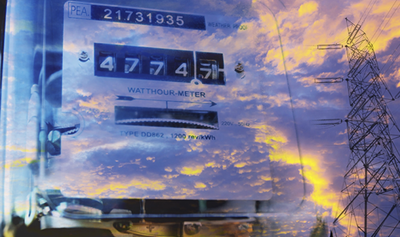


The Energy Employers' Federation (FPE) draws attention to the fact that the measures proposed in the Draft Emergency Ordinance for amending and supplementing Law No. 227/2015 on the Fiscal Code, regulating certain fiscal and budgetary measures, as well as for amending and supplementing certain normative acts were developed in the absence of transparent consultation, without sufficient time for analysis and without an authentic social dialogue with representatives of the economic environment.
The Federation considers that these initiatives violate the principles of good governance, ignore recent promises made by the Government in relation to employers and risk distorting competition, discouraging investments and affecting the functioning of a strategic sector for the economy, while maintaining additional taxes in the oil and gas sector and introducing new fiscal measures will have negative effects on the entire energy market, according to a press release from the Federation.
"FPE expresses its firm opposition to the extension of Emergency Ordinances no. 5/2013 (on the establishment of special measures for the taxation of activities with a natural monopoly character in the electricity and natural gas sectors n.r) and no. 6/2013 (on the establishment of special measures for the taxation of the exploitation of natural resources, other than natural gas n.r), simultaneously with the maintenance of the turnover tax applicable to the oil and gas sector, measures that accentuate overtaxation and seriously affect strategic economic sectors. These decisions deepen fiscal instability and undermine the industry's capacity to sustain long-term investments. In a regional and international context marked by heightened economic competition, Romania needs a strong industry, supported by a stable and predictable energy sector. Unpredictable fiscal policies, adopted without consultation and without a coherent vision, weaken economic competitiveness and endanger energy security," signal the FPE representatives.
According to them, ensuring energy security and the transition to green technologies require massive investments, impossible to achieve in an unstable fiscal climate, and maintaining a predictable fiscal framework is not a formal request from the industry, but an essential condition for sustainable economic development.
The Federation emphasizes that the energy industry has consistently demonstrated its responsibility, contributing 48.8 billion lei to the general consolidated budget in 2022, a 62% increase compared to the previous year. However, this contribution was mainly determined by an accelerated increase in additional taxation, especially in the natural gas sector.


FPE asks the Government for real consultation and time to analyze the draft GEO amending the Fiscal Code.
"In this context, FPE explicitly calls for a real, substantial and constant social dialogue, in which the industry's positions are listened to and integrated into the decision-making process. Adequate time is needed for analysis, impact assessments and authentic consultations, not decisions adopted in an emergency regime, without a solid economic foundation. At the same time, the Federation emphasizes that any significant fiscal change must be announced at least 6 months before application and integrated into a multi-annual fiscal policy calendar, which should provide the economic environment with the necessary predictability for investment planning and long-term development. In the absence of these principles, Romania risks losing strategic investments, jobs and development opportunities in a vital sector for the economy," the press release emphasizes.
The FPE requests aim to: initiate real and transparent consultations with industry and representative employers; adopt predictable fiscal policies, announced in advance and integrated into a coherent multiannual framework; re-analyze the proposed fiscal measures, taking into account the real economic impact.
The Energy Employers' Federation reaffirms its willingness to actively contribute, with expertise and concrete data, to building a balanced, sustainable and future-oriented fiscal policy, for the benefit of the Romanian economy.
The Energy Employers' Federation, founded in 1991, represents 95% of Romania's oil and gas industry and is gaining increasing relevance in the field of renewable energy and technologies necessary to reduce emissions, in line with their development in our country.













Comentează