



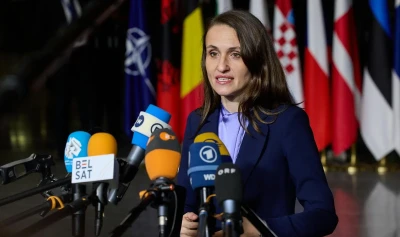


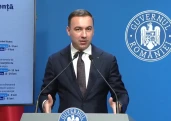
The Central European Initiative (CEI) is home to 160 million citizens, Romania's Foreign Minister Oana Toiu said on Thursday at the launch in Bucharest of the Romanian Presidency of the CEI.
The chief Romanian diplomat opened on Thursday the first meeting of the Committee of National Coordinators (CNC), an event that marks the official beginning of Romania's term of office as Chairman-in-Office (PiE) of the Central European Initiative (CEI) for 2026.
Attending the meeting were Secretary General of the CEI Executive Secretariat Franco Dal Mas, as well as the national coordinators from all 16 member states of the initiative, reconfirming the role of the CEI as a platform for strategic dialogue and regional cooperation, according to the Romanian Foreign Ministry (MAE).
At the official opening, Toiu and Dal Mas, presented Romania's strategic objectives, under the motto "Closer in the region, stronger in Europe": - European integration: Strengthening the role of the CEI as a bridge between the EU member states and the candidate ones; - Connectivity: Promoting cross-border economic partnerships and regional investments; - Information resilience: Combating information manipulation and disinformation; - Local dimension: Supporting local administrations in delivering concrete initiatives for citizens; - Youth: Engaging the new generation to build a future based on trust and shared values."
Romania considers the integration of the Western Balkans, Ukraine and Moldova not a mere technical exercise, but a strategic need of the region. Enlargement is a vital geopolitical investment that strengthens the EU's global position, while giving candidate countries the power to modernise their economies, increase their prosperity and build resilience to external shocks. CEI is home to 160 million citizens, and the strength of our regional cooperation lies in the ability of local authorities, communities and citizens to connect. Our combined GDP is approximately EUR 5 trillion, which can only mean that there is significant potential for a more dynamic economic space," MAE quotes Toiu as saying .
"Here in Bucharest, I reaffirmed the importance of continuing the path of European integration - with a clear focus on the Western Balkans - and of maintaining unwavering support for Ukraine. Enlargement remains a strategic priority for our region and for Europe as a whole," said CEI Secretary General Franco Dal Mas.

A central item on the agenda was the commemoration of four years since the start of Russia's war of aggression against Ukraine. The national coordinators reiterated their support for Ukraine's sovereignty and for the democratic resilience of the Republic of Moldova, both countries being deeply affected by the consequences of the conflict and hybrid threats.
Also, during the meeting, steps were set for the major events of 2026, such as the 30th anniversary of the Secretariat and the preparation of the high-level conference in Trieste, on March 17, 2026.
The working day with the national coordinators ended with an informal discussion session dedicated to protecting the information space against foreign information manipulation and interference (FIMI).
Experts from the European External Action Service (EEAS) and the Romanian authorities (MAE, ANCOM, CNA) analysed ways to strengthen societal resilience in the Western Balkans and the Eastern Neighbourhood, according to MAE .
Romania holds the Presidency of the ECI in 2026, with the main mission of supporting the European path (including through the transfer of expertise and strengthening institutional capacity) and sustainable development in the region.
ECI is the largest regional cooperation forum in Central and South-Eastern Europe, bringing together EU member and candidate states.
The 16 members are: nine EU member states - Bulgaria, Czech Republic, Croatia, Italy, Poland, Romania, Slovakia, Slovenia, Hungary, and seven candidate states - Albania, Bosnia and Herzegovina, the Republic of North Macedonia, the Republic of Moldova, Montenegro, Serbia and Ukraine.
The CNC is the body responsible for the implementation of ECI initiatives and programmes and the preparation of the organisation's high-level political decisions.
























Comentează