



The economic activity in Romania will see a severe drop in the second quarter of this year, by 14.4 per cent, while the impact on the manufacturing industry in the mentioned period will be about 18 per cent, and the decline in manufacturing textiles and clothing, leather, and also in the automotive industry will exceed 35 per cent, according to the 2020 Convergence Programme published by the Ministry of Public Finance (MFP).
"The forecast of gross domestic product for 2020 took into account the effects of the COVID-19 pandemic, as well as support measures for the business environment, the labour market and consumers, but also interventions in the medical field. Estimates point to a severe drop in the economic activity in the second quarter of the year (by 14.4 per cent), the quarterly profile showing a predominantly "V" -shaped development, but without a return to the situation back in the winter (absence of coronavirus), and with an actual recovery to happen in the fourth quarter. The scenario is based on a negative economic impact limited in time, around 4 months (March-June), following a partial expansion in July-September, starting from the experience of China, which showed signs of recovery after 4 months.
The likely impact on the manufacturing industry in the three most affected months (March-May) will be a reduction of about 18 per cent compared with the corresponding period in 2019, with a sharper decline, exceeding 35 per cent, in the manufacture of textiles and clothing, leather and automotive industry.
During the peak period of the pandemic, services will have a negative contribution of 9.3 percentage points to the GDP dynamics, followed by industry (-3.9 percentage points). The services will be impacted especially on the segments of real estate transactions, hotels and restaurants, recreational activities, transports, maintenance services.
"Favourable macroeconomic conditions will continue to operate, especially in the third quarter, given that foreign markets will not be lost and the economy has the potential to recover through government revenue-saving measures and restarting measures (the advantageous lending of SMEs), so that reversible factors will prevail over irreversible ones," it is shown in the convergence program.
In this context, the Romanian economy is expected to register a reduction of 1.9 per cent annually, in real terms, being the result of negative contributions from both domestic demand (-1.6 percentage points) and net exports, but to a lesser extent (-0.3 percentage points). Thus, the slowdown of the mentioned sectoral indicators led to the revision of the GDP dynamics in the coronavirus scenario by about 6 percentage points, respectively from + 4.1 per cent in the winter forecast.
Convergence proigramme for 2020: Economic activity expected to show serious drop in Q2 (-14.4pct)
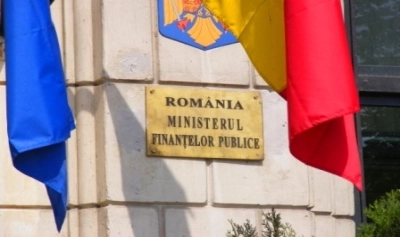
Sursă foto: stiripesurse.ro
Distribuie articolul


Distribuie articolul


București 5°C
5°C
5°CArticole Similare

18
Romanian Embassy in Republic of Moldova: Russia's actions are not abstract or distant, affects everyday life
18

8
FEPAIUS head: Romania's textile industry needs fast investment in digitalisation, circular economy to remain competitive
8

10
We decide to set up inter-institutional group to monitor and control availability of medicines (health minister)
10

8
Sustainable Development Advisory Council expert: Romania in a three-year energy crisis, with a distorted market
8

14
Bucharest Mayor meets Crown Custodian, Prince Radu for talks on infrastructure, transport and energy
14

8
Israel's Embassy: Taking all the steps to bring the Holy Easter Light from Jerusalem
8

9
Pilot project underway to map geothermal potential of shallow groundwater in Crisuri basin
9

7
National Financial Education Program for Romania concludes strategic partnership with John F. Walsh
7

12
Airbus, IAR Brasov explore industrial cooperation on Romania's H225M multirole helicopter project
12

11
One million tourists visit fortified churches of Transylvania in 2025, with most of them Romanian
11

12
AAC warns ordinance reducing gasoline biofuel content harms farmers, poses EU legality issues
12
10
Storage needed as national grid can no longer cope with amount invested in photovoltaic panels
10

9
Florin Jianu (IMM Romania): We want a meeting of the National Tripartite Council to limit fuel prices
9















Comentează