



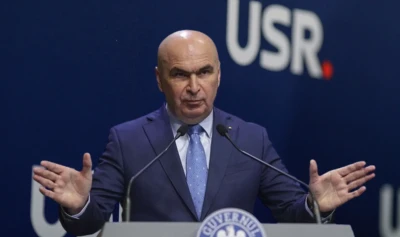


The government will decide in the coming period to reduce fuel excise duties, with the measure primarily targeting diesel, Prime Minister Ilie Bolojan announced.
"As prices appear to be nearing a plateau, we intend to intervene where possible based on market analysis. While we considered adjusting fuel-related taxes - either VAT or excise duty - we opted against changes to VAT in order to avoid an infringement procedure with the European Commission, given Romania's excessive deficit and limited scope for tax cuts. We have therefore decided to act on the excise component, reducing it in the coming period to help lower fuel prices, with a primary focus on diesel," Ilie Bolojan said on Monday evening on Digi24.
The prime minister explained that price increases have been most significant for diesel.
"This is where the largest increases have been, and over 70% of fuel consumption in Romania is diesel. By acting in this area, even in stages, the measure will impact around two-thirds of those who use cars in Romania. (...) This is the working hypothesis. (...) If we want to have an effect, we must intervene where the impact is greatest and affects a significant number of citizens," Bolojan said.
He also detailed how the measure is expected to work.
"We are working on one or two scenarios that will be presented in the coming days, so as to maximise the market impact while also taking into account our fiscal capacity, because all these reductions imply costs borne by the state budget. For example, the additional VAT revenues collected in March as a result of rising prices have effectively been redirected towards subsidies for transport operators and farmers. Again, this intervention must be sustainable and covered by state budget resources," the prime minister explained.
Bolojan said the government will announce the exact level of the reduction in the coming days and added that fuel sector companies will also contribute to financing the measure.
"We have a specific structure in the Romanian market, with companies that extract crude oil domestically, refine it in Romania, distribute it and sell it at the pump. We also have companies that do not extract crude oil in Romania but refine it here, such as Rompetrol-KazMunayGas, and continue the chain. There are also companies that do not refine in Romania but import refined products, as well as companies that simply purchase and resell. All these actors have different profit margins and situations, but those in a position to generate exceptional profits - either by exploiting domestic crude or through integrated operations - must contribute a significant share of these exceptional profits to a solidarity fund, from which price reductions can be financed," Bolojan said.
He added that the Ministry of Finance is working on the technical and financial details to ensure the measure is applicable and sustainable.
"This will be done following consultations with all stakeholders, so that by the end of this week we can adopt the measure and have it enter into force next week," Bolojan said.

The prime minister ruled out the possibility of fuel shortages.
"This is an exceptional, temporary measure that applies strictly to this period and does not affect companies with partial supply chains. If you simply buy diesel on international markets and sell it in Romania, you do not generate exceptional profits, as you must purchase at the new prices driven by the conflict involving Iran," Bolojan said.

















Comentează