



The wild horses of the Danube Delta represent a brand, but also a real "genetic treasure", arousing the interest of visitors who put foot in the area.
The head of the Centre for the Study of Transborder and Emergent Diseases and Zoonoses with the Danube Delta National Institute for Research and Development (INCDDD), Stefan Raileanu, reveals less known things about their lives, introducing us to the mysterious world of the horses gone wild, as the wild horses here are called.
The southeastern Tulcea researcher tells us about the different behavior of the wild horses from the Reserve compared to that of the horses raised on private farms, a behavior similar to that of a wild animal.
"The mating ritual is a true celebration, a spectacle of nature extraordinarily beautiful. For three days, the horses fight to determine who the alpha male will be. Each time, there is a suitor who fights him, usually a son or grandson of the alpha male. The two horses fight by day, and at night they enter the water to deflate their wounds. The battle ceases when one of them makes a bow in front of the other and thus gives him the way to the mares. I've seen fights that lasted even eight days. The defeated one withdraws and looks for another group," the INCDDD representative tells AGERPRES.
Horses reach sexual maturity at the age of two to three years, but in the wilderness only the strong mate, Raileanu says. The mating takes place in spring and autumn, and the alpha male remains in power for six or seven years.
The gestation of a mare lasts almost 12 months and, as a rule, gives birth to a foal that in the wild follows a certain school taught by the members of the groups.
The stallions, driven by the pheromones of the mares released immediately after the birth, tend to kill their foals, so that the old mares, in order to protect the little ones, know when to exclude the mother-mare from the group.
"The education of adolescent foals is handled by the dominant mare, along with two or three other mares and a stallion. The most skilled horses carry teenagers from water to food in a certain manner so that they learn to run correctly, to do the biomechanics of walking, as they say in terms of specialty. After they form their walks, an old mare or an old horse teaches them their senses at night, how to avoid the jackals or other predators, and usually take them to places with thickets where they teach them to listen to the movements of other animals and how they can get away from danger," Stefan Raileanu adds.
The wild horses of the Danube Delta Biosphere Reserve feel that their end is approaching with a winter ahead and retreat to less walked areas.
"The males retreat into groups of monks and no longer participate in the mating battles. They form groups in which they wait for death. Those who die on their feet, as the villagers say, die because of the affections that appear in the teeth. Their teeth shrink and they can no longer provide mastication. The horses are then loosing weight, and retreat to less walked areas, frequented by the jackals. They fall and their meat is cleaned from their bones by these craftsmen of hygiene, the jackals," the INCDDD researcher explains.
A horse can live even 40 years in a man-controlled environment, but his life is halved in the wilderness, depending on the winters and the way he finds his food source.
The main threat to the wild horses of the Delta is the jackal, a species whose herds have grown significantly in recent years.
"The counting of horses should be made three months after birth, because then the foal can no longer be killed. We encountered situations in which the mare sat down to give birth, and the jackal not only pulled the foal out of it, but entered the mare and ate its internal organs," Stefan Raileanu says.
However, the INCDDD representative does not support human intervention and shows that the populations of wild horses in the Delta are decreasing, yet they are not in danger.
The horses from the Danube Delta living in a state of freedom have been in recent years, repeatedly, in the attention of the authorities. After the foresters drew the attention that they wild horses are destroying the Letea Forest, a strictly protected natural area, and the veterinarians reminded that the Delta is a hotbed of infectious anemia, a situation that allows the locals to transport the horses from the area only to the slaughterhouse in order to collect state subsidies for each animal, in 2012 the national authorities announced that they wanted to carry out a project for the tourist promotion of the area, the Letea Protocol.
The project has never come into force, given that the legal regulations in force do not allow the carrying out of tourist activities in the strictly protected areas of the Danube Delta Biosphere Reserve and despite the fact that tourist routes have been arranged in the area.
WILD DELTA/ Wild horses of Letea forest, a brand and a genetic treasure
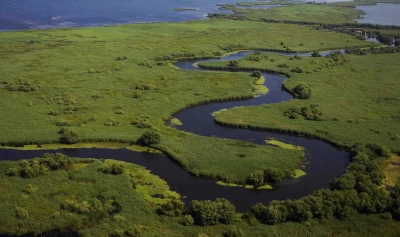
Sursă foto: basilica.ro
Distribuie articolul


Distribuie articolul


București 12°C
12°C
12°CArticole Similare

11
U.S. ambassador, Economy minister discuss strategic partnership economic component, focusing defence, mineral resources
11
10
Romanians in week of financial passions ahead of austere Easter (analyst)
10
23
76 Rosetti well reaches 5,256-metre depth; Caragele deposit to ensure 4% of 2026-2027 national gas production
23

28
Gov't prepares tightening legislation on extracting mineral aggregates from riverbeds
28
21
Defence Ministry warns about new drone attacks near Romanian border
21

15
Romanian Academy to elect its chairman
15

24
Romania's Ruse reaches Linz Open singles R16
24

11
Romanian restaurants want more "local" on the plate, 98 pct seek partnerships with local producers
11
12
Area afected by Danube Delta dry-vegetation fires triples over past decade
12

13
Bucharest Stock Exchange closes mixed in first trading session of the week
13
22
Israel's Elbit Systems pledges start of Watchkeeper X drone deliveries to Romania after repeated delays (Reuters)
22

21
Romania has no fuel supply issues amid Strait of Hormuz closure - President Nicusor Dan
21
10
Sixth edition of Film O'Clock International Festival to kick off on April 16 across 12 countries
10












Comentează