



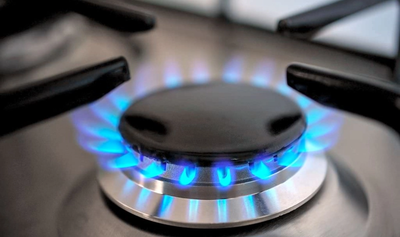


Recent increases in gas prices on the European TTF hub in Amsterdam highlight the vulnerability of Eastern European economies to external shocks and bring back into focus the need to diversify supply sources, including through the development of the Vertical Corridor, shows an analysis by consultancy firm Frames.
"The European gas market is once again going through a period of extreme volatility, and Romania is at a critical moment for its energy security. The recent spikes on the Title Transfer Facility (TTF) hub in Amsterdam have shown how exposed Eastern European economies remain to external shocks," the authors note.
Frames reports that within just a few days, TTF quotations rose by more than 70%, and in a single trading session on March 2, gas prices jumped by almost 40%, reaching around 44 - 46 EUR/MWh. As the main reference for Europe, any major movement on TTF quickly spreads across the continent.
For Romania, the impact is immediate. Even with significant domestic production, the country is not insulated from the European market. During peak consumption periods, especially in winter, necessary imports are made at these high prices set by the Dutch hub.
"This surge puts enormous pressure on energy suppliers and, inevitably, on the economy. The Romanian market, although supported by valuable domestic production, is not shielded from these external shocks," the analysis states.
The situation is even more sensitive as, starting April 1, the gas market enters a new stage of liberalisation for businesses. Romania currently operates with two parallel markets: one with state-protected, capped prices for households, and another where companies are fully exposed to market volatility. For industry - food producers, factories, and energy-intensive sectors - sudden price spikes translate directly into soaring production costs.
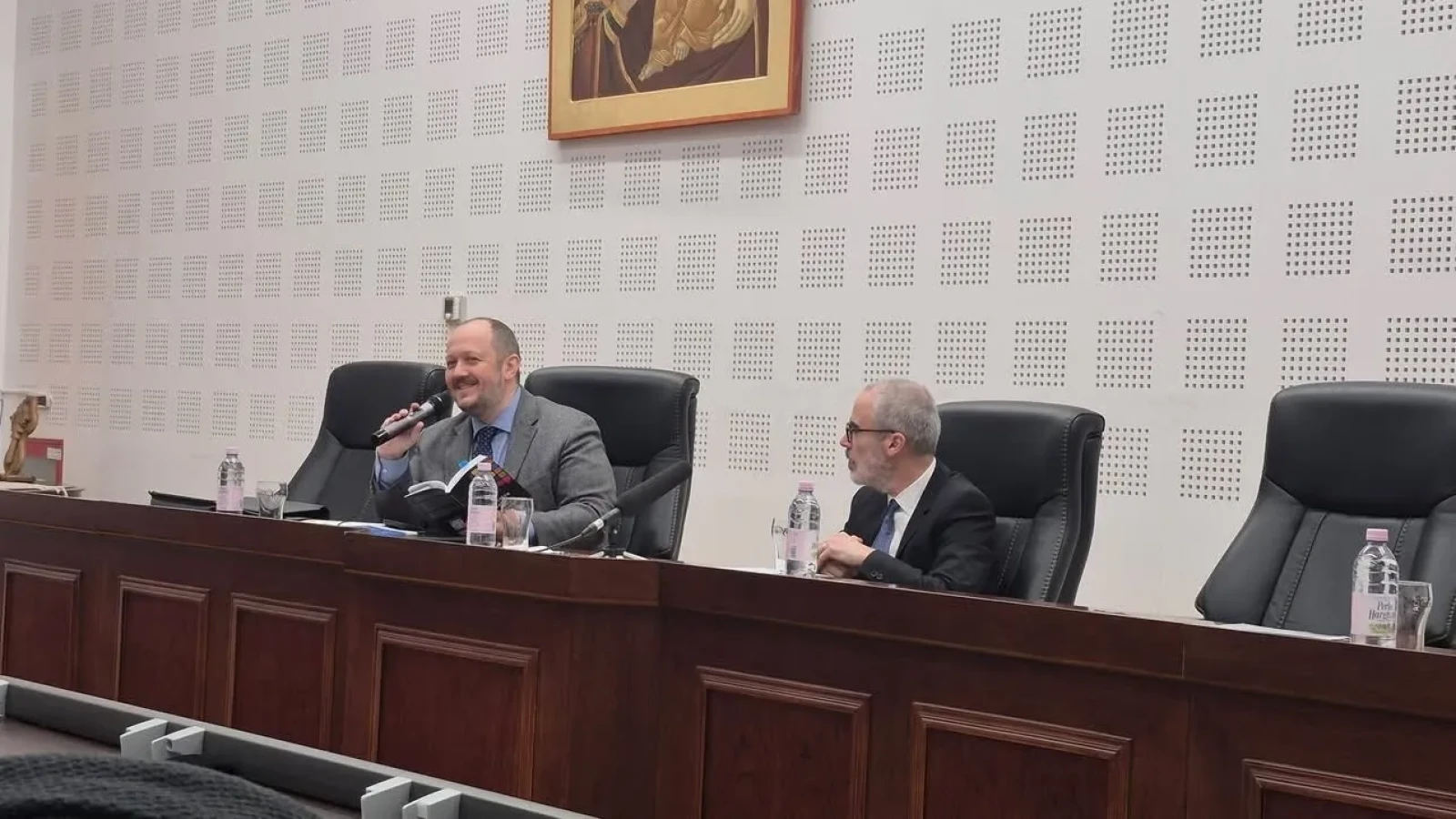

"The economic impact is inevitable: higher costs feed into final prices, fuelling inflation. At the same time, the state cannot indefinitely support compensation schemes, especially in a year focused on reducing the budget deficit," said Frames manager Adrian Negrescu.
According to him, buying gas "day by day" has become a financial gamble. For industries that use gas not only as energy but also as a key raw material, spot-market volatility makes planning nearly impossible. Medium- and long-term contracts, three to ten years, are seen as the only realistic solution for predictability.
To make such contracts viable, Romania needs real access to diversified gas sources. In this context, the Vertical Gas Corridor becomes essential, the analysis argues. The corridor links LNG terminals in Greece with markets in Bulgaria, Romania and Hungary, allowing LNG from the US, Qatar or the Caspian region to reach Southeast Europe without relying on traditional routes.
"Liquefied natural gas is methane that has been cooled, a process that turns it into a liquid with a much smaller volume. In this form, the gas can be transported over very long distances by special ships, then regasified at port terminals and fed into pipeline networks," the study notes.
For Romania, the benefits would be twofold: access to a global gas market and greater competition among suppliers, thus helping stabilise prices. Supported by the gas transmission operators of Greece, Bulgaria and Romania, the project is part of the EU's strategy to diversify energy sources in Southeast Europe.
"Romania has a strategic position in this system. With its extensive pipeline network and large underground storage capacity, the country can become a regional transit and distribution hub," Negrescu added.
Combined with future Black Sea gas production, Romania could become an important energy player in Central and Southeast Europe. Blending Black Sea gas with LNG imported through Greece could create a more stable and competitive regional market, reducing dependence on limited sources and on European spot-market volatility.
The sharp price spikes in Amsterdam show that Europe's gas market remains extremely sensitive to geopolitical events and supply disruptions.
"For Romania, the lesson is simple: relying on daily market fluctuations cannot be an energy strategy," Negrescu said.
Securing long-term gas volumes, diversifying supply sources and connecting to global flows through the Vertical Corridor are, at this stage, the most feasible solutions for stabilising the market and ensuring fair gas prices for the economy. Without this infrastructure, Romania risks remaining captive to a volatile regional market where every international crisis quickly becomes a domestic economic shock, the analysis concludes.











Comentează