



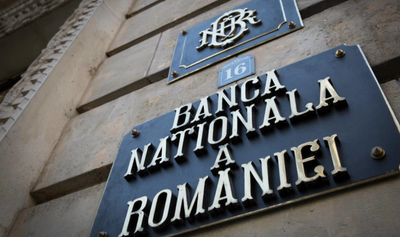


In its first monetary policy meeting of 2026 on Monday, the board of the National Bank of Romania (BNR) decided to keep the monetary policy rate at 6.50% per annum.
According to BNR, the board also decided to leave unchanged the lending (Lombard) facility rate at 7.50% per annum and the deposit facility rate at 5.50% per annum, and also to maintain the existing levels of minimum reserve requirement ratios on both leu- and foreign currency-denominated liabilities of credit institutions.
"The BNR board decisions aim to ensure and maintain price stability over the medium term, in a manner conducive to achieving sustainable economic growth. The BNR board reiterates that, at the current juncture, the balanced macroeconomic policy mix and the implementation of structural reforms, also by using EU funds to foster the growth potential over the long term, are of the essence in preserving a stable macroeconomic framework and strengthening the capacity of the Romanian economy to withstand adverse developments. BNR closely monitors developments in the domestic and international environment and stands ready to use the tools at its disposal in order to achieve the fundamental objective regarding medium-term price stability, while safeguarding financial stability," according to a BNR press statement released on Monday.
The annual inflation rate dropped slightly over the last three months of 2025 to stand at 9.69% in December, from 9.88% in September, given that the significant declines posted during this period by the fuel and VFE price dynamics were largely offset by the increase in annual core inflation rate.
The annual adjusted CORE2 inflation rate continued to pick up during 2025 Q4, climbing to 8.5% in December from 8.1% in September. This reflects the persistent influences stemming from the dynamics of wage costs and the high level of short-term inflation expectations, alongside those coming from the rises in some agri-food commodity prices and the EUR/RON exchange rate, as well as from indirect effects of electricity price hikes.
The annual inflation rate calculated based on the Harmonised Index of Consumer Prices (HICP - inflation indicator for EU member states) stood at 8.6% in December 2025, a level similar to that in September 2025. The average annual CPI inflation rate went up to 7.3 % in December 2025 from 6.1 % in September, while the average annual HICP inflation rate reached 6.8 % in December 2025 from 5.9 % in September 2025.
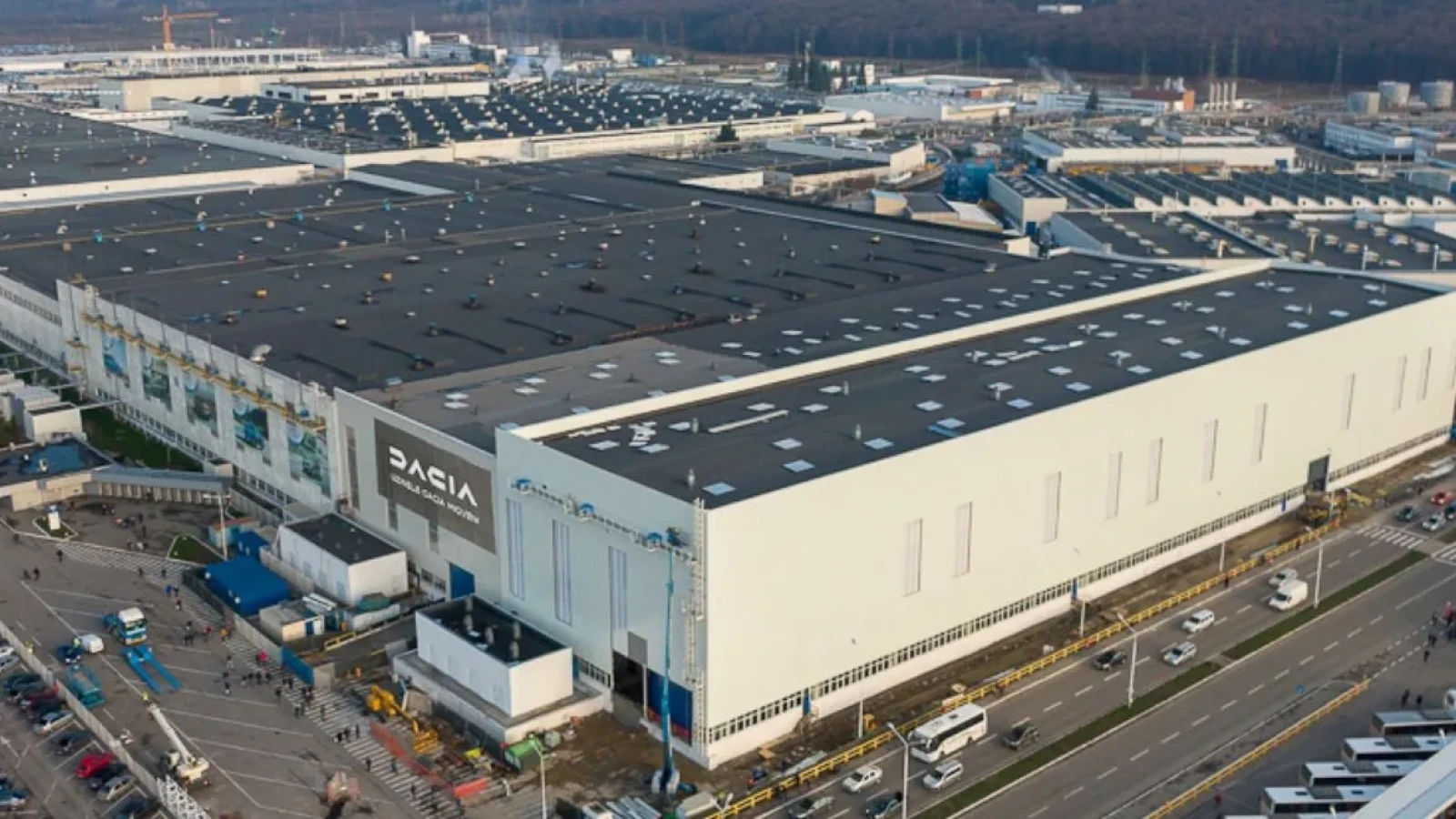

Business contracted by 0.2 % in 2025 Q3, after expanding by 1.1 % in the previous quarter (quarterly change), so that the aggregate demand deficit is likely to have widened further over this period, relatively in line with forecasts.
Annual GDP growth stepped up to 1.7 % in 2025 Q3 from 0.3 % in Q2, mainly due to gross fixed capital formation, the annual dynamics of which climbed significantly into positive territory after a fall to a marginally negative value in the previous quarter.
Moreover, private consumption advanced at a somewhat faster rate year on year and the impact of net exports became expansionary again in 2025 Q3, given that the rising annual rate of change of exports of goods and services, in terms of volume, exceeded visibly that of imports, which continued to decline.
Consequently, the trade deficit saw a steeper contraction in annual terms in 2025 Q3 and the current account deficit continued to shrink versus the same year-earlier period, albeit at a slower pace than in Q2, owing to the worsening in the primary income balance.
The latest data and analyses point to a stagnation of economic activity for 2025 Q4, in line with previous forecasts, associated with an increase in annual GDP dynamics, amid mixed developments across the aggregate demand components and major sectors.
Thus, October through November 2025, retail sales witnessed a stronger fall compared to the same year-earlier period and industrial output dropped further year on year, whereas the annual dynamics of the volume of construction works remained in double-digit territory in October, reporting only a slight setback against Q3.
Moreover, the differential between the annual change in exports of goods and services and that in imports remained positive in October-November 2025, following their similar-sized decreases versus Q3.
Against this background, trade deficit saw an even stronger contraction in annual terms in the first two months of 2025 Q4, whereas the current account deficit posted only a mild renewed widening versus the same year-earlier period, the pronounced worsening of income balances notwithstanding.
Looking at the labour market, the number of employees economy-wide continued to decline in September and October 2025, while the ILO unemployment rate inched down in October-November overall, after rising to an average of 6.1% in 2025 Q3.
The surveys in 2025 Q4 indicate that employment intentions over the very short horizon remained at the much lower level recorded in the previous quarter, while still running slightly above the historical average, and the labour shortage reported by companies shrank, offsetting the moderate increase seen in the previous three months. The annual growth rate of nominal gross wage witnessed a slower fall October through November versus the previous quarter, whereas the unit labour cost in industry posted a renewed pick-up in annual terms.
The main interbank money market rates continued to decline gradually in November and December 2025, still running above the April levels at year-end, while medium- and long-term yields on government securities remained on a downward course, hitting lows for the past 13-14 months. The EUR/RON exchange rate trended upwards as of mid-November and witnessed somewhat stronger fluctuations in December 2025, amid the successive revisions of investor expectations on the outlook for the Fed's policy rate, but also reflecting the steps taken domestically for the adoption in full of the second package of corrective fiscal measures and of other budget consolidation measures."
In relation to the US dollar, the leu appreciated significantly in December, largely recovering the ground lost in the first two months of 2025 Q4, given the former's weakening in the international financial markets during the closing month of 2025.
The annual growth rate of credit to the private sector shrank further in the first two months of 2025 Q4, yet markedly slower than in the previous quarter, falling to 6.8% in November from 7.5% in September, as the rate of change of the leu-denominated component moderated visibly its decline, mainly on the back of loans to non-financial corporations, while that of foreign currency credit saw only a mildly slower upward path.
The share of the domestic currency component in credit to the private sector thus narrowed to 68.7 % in November 2025 from 69.1 % in September. The current assessments indicate the prospects for the annual inflation rate to decrease slowly in the first three months of 2026, amid the influences stemming from developments in some commodity prices, agri-food included, and from base effects, overlapping the above-expectations transitory direct effects exerted by the expiry of the electricity price capping scheme and by the increases in VAT rates and excise duties in 2025 Q3, which will dissipate in the second part of this year.
Moreover, the fiscal adjustment initiated in 2025 and probably continued in 2026, inter alia via the implementation of additional fiscal and budgetary measures at the beginning of this year, is likely to entail in the future increasingly stronger underlying disinflationary pressures, especially from aggregate demand, and lead to the further correction of the current account deficit.
At this juncture, the full absorption and use of EU funds, especially those under the Next Generation EU programme, are essential for partly counterbalancing the contractionary effects of budget consolidation and of geopolitical/trade conflicts, as well as for carrying out the necessary structural reforms, energy transition included.
The ECB's and the Fed's monetary policy decisions, as well as the stance of central banks in the region, are also relevant.
The monetary policy interest rate had been unchanged since August 2024.
The next monetary policy meeting of the NBR Board will be held on 17 February 2026.




















Comentează