





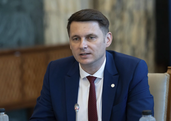
Alliance for the Unity of Romanians (AUR) Senate floor leader Petrisor Peiu said on Monday that Romania's current economic difficulties are unrelated to any potential recession at European level, arguing that "the government is promoting a theory regarding a so-called technical recession".
"This term 'technical recession' has been used in recent years in several European countries to define economic contraction for two consecutive quarters. But what we have in Romania is something much broader," Peiu told a press conference at the Parliament House. He noted that in 2025 Romania recorded "three quarters of economic decline", although not consecutive, and that in 2024 the country had "two consecutive quarters of contraction", accompanied by high inflation. "This means, if you want, that in 2024 there was a kind of technical recession," he added.
Peiu stressed that the fourth quarter of 2025 saw "an extremely steep" drop. "The decline was almost 2% of GDP. The general rule is that if the economic decline in a quarter is greater than 1.5% of GDP, then we are talking about a serious recession," he said, and also pointed to "very small annual GDP increases" of 0.9% in 2024 and 0.6% in 2025, which in his view indicate "a much more serious phenomenon".
He argued that Romania's situation diverges sharply from the rest of Europe. "What is happening in Romania is far outside the European pattern. It is a purely local, national, Romanian recession. It has nothing to do with the causes that determined contractions at the European level," Peiu stated.
The senator also pointed to the unemployment rate and rising prices as signs of deeper trouble. "An unemployment rate of 6% again falls into the category of serious recession. We have the fewest job vacancies in the European Union - only 0.6% of jobs in Romania are vacant," he said. He added that inflation is being pushed higher by energy costs: "Energy prices have increased by 60% over the last year, almost 20% for heating energy. Inflation will continue to grow, fueled by the increase in production prices."

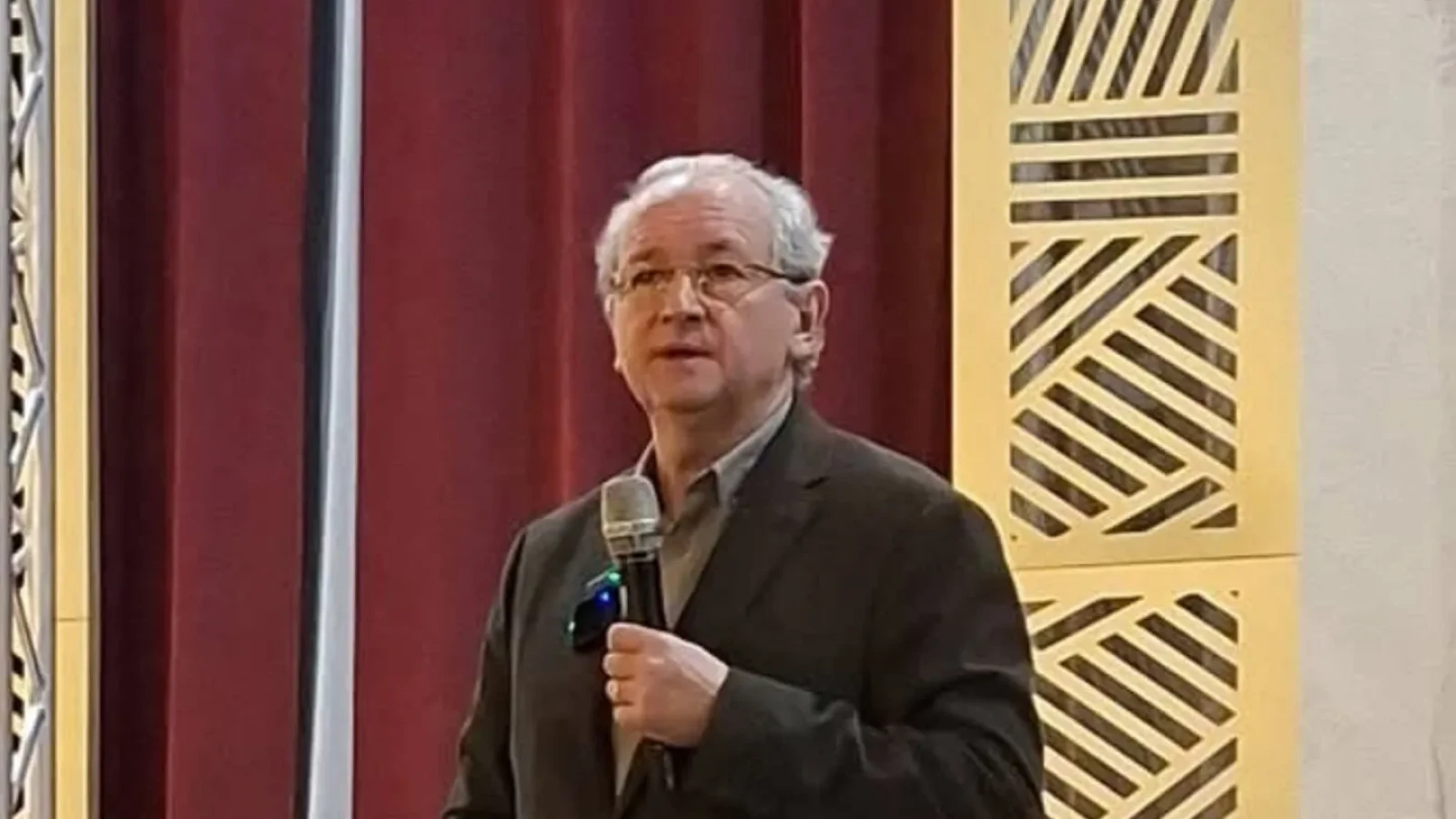
Peiu argued that production prices have risen by 68% since the current coalition took office. "This shows us that the medicine found by the Bolojan government to solve the budgetary situation was inappropriate. They increased consumption taxes - VAT rates and excise duties - while production prices, especially electricity prices, were rising sharply," he said.
As an alternative, he proposed reversing last year's tax hikes. "What we propose as an urgent crisis medicine is the decrease or return of VAT rates to those before their increase in August 2025, plus solving the problems related to the electricity and natural gas markets to stop the increase in prices," the AUR lawmaker said.
According to the National Institute of Statistics, Romania's economy grew by 0.6% in 2025 but ended the year in technical recession, with GDP down 1.9% in the fourth quarter compared with the third - its second consecutive quarterly decline.

















Comentează